
What is a Red Flour Beetle?
The red flour beetle (Tribolium castaneum) may be small but is an aggressive and economically important pest of flour and other grain products worldwide. It belongs to the family Tenebrionidae.
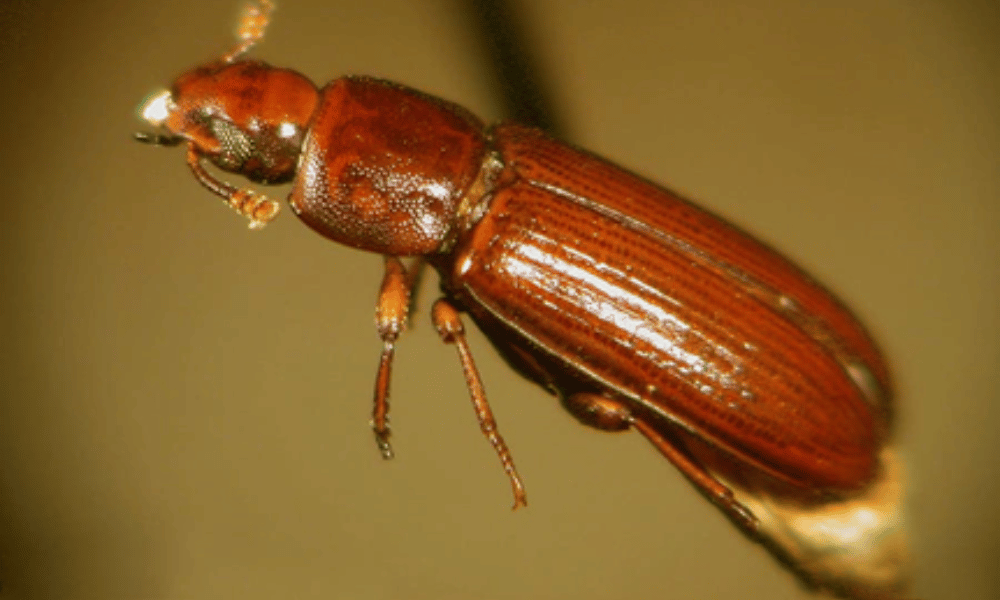
Appearance:
Considered a small insect, reddish-brown in color, rough-grained, and measuring around 1/8 inch (3-4 mm), the beetle is oval-shaped and has noticeable antennae appendages.
Production:
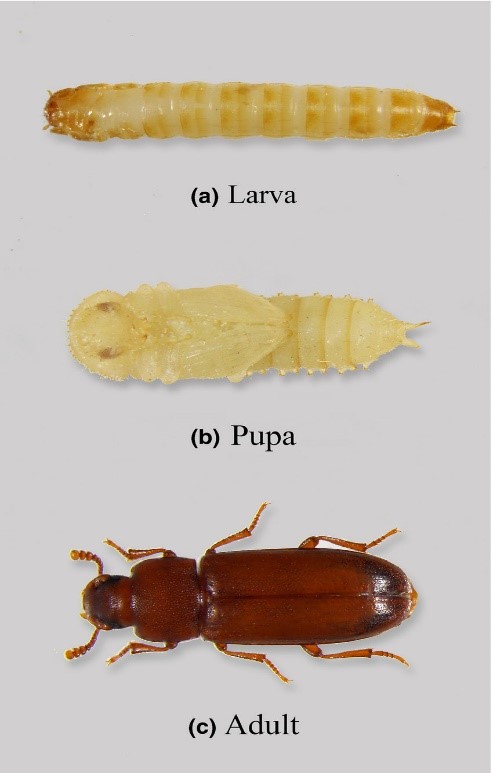
The relationship between the Lifecycle of red flour beetle and the working processes of flour is tight. adult beetle drops its eggs into the stubs or in glance areas of Silos, Mills, or vehicles at ambient temperatures ranging between 68oF and 90oF (20oC and 32oC) with humid levels above 60%. The eggs develop into larvae which chew the flour until they grow through several molts before developing into adults. The entire cycle of development and reproduction takes hardly 4-6 weeks, making it possible for some generations within one year.
Causes:
Usually, Infestation occurs during the grain handling process, most especially when:
- Grain is improperly dried or frozen or kept for too long
- The grain pest control and cleaning operations on milling gear and premises are not done
- Shipping containers have pest contamination
- Moisture and or heat conditions are topped to flour
AD's



Preventive Measures:
- Clean Storage: Regularly sweep, vacuum, and sanitize storage areas and equipment.
- Proper Handling: Handle grain and flour gently, store in airtight containers, and rotate stocks.
- Environmental Control: Maintain low humidity (below 60%) and cool temperatures (below 68°F).
- Monitor and Detect: Use sticky traps, bait traps, and regular inspections to detect infestations.
- Seal Entry Points: Seal cracks, crevices, and openings to prevent beetle migration.
By following these simple steps, you can prevent red flour beetle infestations and protect your grain supply.
Controlling Red Flour Beetles
To prepare the environment against any future infestations, apply the following measures:
- Storage places, milling machines, and transport vessels must be cleaned. Such cleanliness practices help avoid making an ideal living environment for the beetles.
- Seal the grain against ventilation and store it at low humidity level (below 60%) and low temperature (below 20 degrees Celsius) to inhibit the growth of the beetles.
- Implement the First In – First Out (FIFO) stock control principle, to minimize chances of infestation and ensure that beetles do not multiply.
- Sticky traps or bait traps can be set in the areas most likely to be infested and these can be regularly changed to take in any new infestations that arise in beetle populations.
- Use of Pyrethrin sprays or powders over the specific areas used for treatment as both environmental and health aspects must be taken into account.
- Use of natural enemies such as parasitic wasps, fungi, and nematodes specific to the red flour beetle can help to control their populations.
+92 (331) 9707926
info@pmcertification.pk