Mosquitoes remain one of the pests with the greatest importance around the world, as they are responsible for spreading such diseases as dengue, malaria, chikungunya, and Zika, diseases affecting millions of people each year. With mosquito populations rising as a result of factors like urbanization, climate change, and other environmental changes, there is a greater need for individuals to be certified under the IPM Certification program.
Integrated Pest Management Certification offers training on technical expertise and skills required by aspiring and seasoned pest management professionals to solve mosquito issues. The training entails complete IPM certification and pest control training, covering topics such as mosquito biology, surveillance, mosquito breeding sites, inspection, proper application of pesticides, and integrated pest management. At the end of the course, trainees are awarded a professional certification to prove their competency.
As you start out in your mosquito technician career or wish to take it up to the next level as part of your pest control career, obtaining an IPMC certificate could help add value to your credentials and increase your job opportunities. In this article, you will discover how IPM Certification will help you grow your career in mosquito management, the skills learned in this training course, and the advantages of being a certified expert in the fast-growing field of mosquito and vector control.
What Is an Integrated Pest Management Certification?
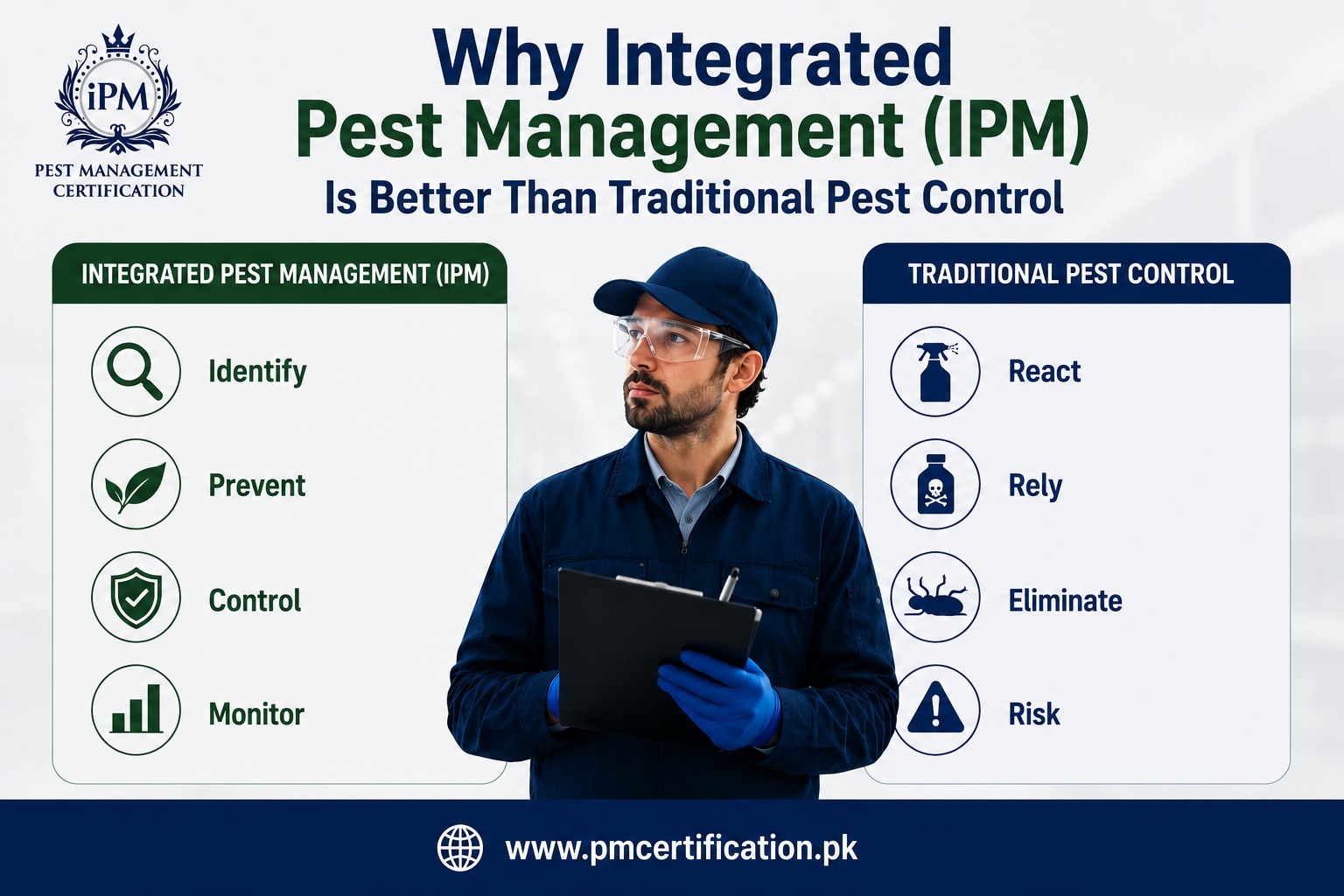
The Integrated Pest Management Certification (IPMC) is a professional training program aimed at equipping individuals with the necessary knowledge and skills in order to practice pest management effectively. It is a program whose primary emphasis is on training participants on integrated pest management (IPM) strategies that will enable them to prevent, monitor, and control pests in safe and sustainable ways.
Even as the program gives broad information and skills in terms of pest management, it also offers specific information that can help professionals become skilled in mosquito management. Upon completion of the program, participants earn a professional certification.

- Purpose of an IPM Certification
The main objective of the IPM Certification Program is to educate pest management operators about making wise decisions by inspecting, monitoring, identifying, and controlling insects using integrated pest management strategies instead of simply using pesticides.
The program emphasizes prevention, the responsible use of pesticides, environmental protection, and compliance with pest management industry standards. IPMC offers an opportunity for participants to combine theory and practice in order to gain the necessary confidence and skills to control mosquitoes and other public health pests professionally.
- Who Should Pursue an IPM Certification?
IPM certification helps professionals develop technical expertise, gain industry recognition, and unlock new career opportunities in pest management. The course includes entomology education along with various IPM techniques. It allows learners to recognize different types of pests, evaluate pest hazards, prevent infestations, and use sustainable pest control measures.
IPM certification is ideal for:
- Pest Control Technicians
- Entomology Graduates
- Quality Assurance and Food Safety Professionals
- Facility, Operations, and Maintenance Managers
- Environmental Health and Public Health Professionals
- Supervisors, Team Leaders, and Pest Management Consultants
- Knowledge and Skills Covered During Training
Training on the IPMC involves both theoretical and practical aspects to enable trainees to tackle pest management problems encountered in the real world. Training on various issues involved includes the following:
- Integrated Pest Management (IPM): The concept of prevention, inspection, monitoring, and integrated control techniques.
- Pest Identification: Acquiring knowledge on the identification of pests, life cycle, behavior, and mode of infestation.
- Biology and Behavior of Mosquitoes: Understanding various mosquito species, their breeding behavior, feeding habits, and mode of disease transmission.
- Inspection: Systematic inspection of the premises for pest activity, breeding grounds, and environmental factors.
- Surveillance and Monitoring: Using surveillance tools and inspection data for assessment of pest populations and deciding on proper management methods.
- Vector Control: Utilization of integrated programs that can be used to control mosquito populations and prevent vector-borne diseases.
- Identifying Larval Habitats: Identifying areas where standing water occurs or where mosquito larvae develop.
- Source Reduction: Alteration or elimination of mosquito breeding sites to control their population growth.
- Safe Use of Pesticides: The right process for selecting, using, applying, storing, and disposing of pesticides safely.
- Record Keeping and Reporting: Keeping records of inspections, treatments, monitoring, and service provided.
- Regulations: Adhering to all the industry regulations, safety standards, and best practices in the process of pest control.
By undertaking this IPMC training course, one will be competent to ensure effective mosquito management and vector control.
Essential Skills You Gain Through an Integrated Pest Management Certification
Integrated Pest Management (IPM) certification equips one with the necessary practical and technical skills needed to inspect, diagnose, prevent, and manage pest-related issues through IPM processes that are environmentally sound. These skills ensure that service providers can offer pest management services in various fields.
- Accurate Pest Identification:
Certification under the IPM process trains individuals on how to identify common pests, know about their biology and life cycles, and be able to recognize signs of infestation. Proper identification will help professionals choose the appropriate control measure.
Field Example: The technician, during the inspection, finds the presence of mud tubes and damaged wood and recommends the appropriate treatment.
- Inspection and Monitoring Methods:
Individuals are trained on how to carry out systematic inspections to identify pest behavior and entry points and monitor infestations by using the techniques of professional inspections. Early identification can help avoid any serious issues with pests.
Example: Identification of cockroaches in a commercial kitchen through the identification of their feces.
- Identifying and Managing Mosquito Breeding Sites
In this certificate course, students will be able to identify the conditions that will lead to mosquito breeding, like stagnation of water, bad drainage, and sanitation problems. The certificate course also covers mosquito breeding prevention and effective mosquito control techniques.
Field Example: Removing standing water near a building will discourage mosquitoes from breeding.
- Applying Integrated Pest Management (IPM) Strategies
Participants learn to implement essential IPM techniques, such as sanitation, exclusion, monitoring, biological control, and the judicious use of pesticides. The program focuses on prevention first, with chemical treatments used only when necessary.
Practical Example: Rodents can be reduced by sealing up possible openings and through sanitation without heavy use of pesticides.
- Using Control Methods Responsibly
Professional Integrated Pest Management Certification stresses proper use of mosquito control techniques through the selection of the most suitable control technique in relation to inspection results and the environment.
Important skills include:
- Environmental Management
- Removing standing water.
- Better drainage systems.
- Controlling vegetation that acts as a resting place for mosquitoes.
- Enhancing sanitation and preventive maintenance
- Larval Control
- Detection of larval breeding places prior to emergence of adult mosquitoes.
- Implementing suitable larval control measures when necessary.
- Monitoring of larval breeding places post-treatment.
- Adult Mosquito Control
- Choosing suitable adult mosquito control measures from surveillance.
- Implementation of treatments where necessary based on inspection.
- Responsible Pesticide Application
- Choosing suitable pesticides based on label instructions.
- Using proper equipment and application techniques.
- Observing safety measures and environmental protection measures.
- Avoiding unnecessary application of pesticides through integrated pest management.
Practical Field Example:
During a campaign against dengue, the certified technician eliminates breeding places, implements larval control where necessary, and applies adult mosquito control in areas found to be at risk during surveillance.
6. Documentation, Reporting, and Regulatory Compliance
Professional pest management certification also ensures that one acquires documentation and compliance skills to guarantee that the pest management process is done in accordance with industry standards and regulations.
Field Practical Application Example:
After carrying out mosquito control services in a health care facility, the technician writes an extensive report of the inspection, breeding areas observed, services carried out, results from the monitoring, and recommendations for future mosquito prevention.
Benefits of Integrated Pest Management Certification in Advancing Your Career
Gaining IPM Certification will not just ensure that you become qualified professionally; it will ensure that you make an investment in your future career. The growing demand for mosquito management, vector control, and pest management professionals has led employers to prioritize candidates with the right training, practical skills, and industry-recognized qualifications.
- Improved Employment Opportunities
Certification in integrated pest management will definitely make you benefit from increased job opportunities because it will indicate that you have received sufficient training in pest management and possess the required skills to perform the pest management tasks effectively. The majority of pest management firms, governmental organizations, health facilities, and mosquito management firms would be very willing to employ those who are certified due to their ability to work without much supervision.
- Greater Professional Credibility
Professional credibility plays an important role in the pest management industry. If you pass the test to become an IPM expert, you will prove to your employer, client, and co-workers that you are willing to continue growing professionally by engaging in further education.
- Career Advancement into Specialized Roles
The Integrated Pest Management Certification Program helps to train people towards taking up more specialized positions in the pest management industry. By gaining more experience and expertise in technicalities, one can move up in their careers to become leaders, trainers, inspectors, or supervisors or even specialize in managing mosquitoes.
- Competitive Advantage in the Pest Management Industry
The pest management industry has become more competitive, and getting professionally certified. Employers tend to favor certified professionals since they exhibit greater technical skills and competence as well as dedication to the practices of the industry. The Integrated Pest Management Certification demonstrates your competence in the inspection process, integrated pest management, mosquito monitoring, safe use of pesticides, etc.
Industries/Companies/Organizations That Value Professionals with an Integrated Pest Management Certification
Professionals with an Integrated Pest Management Certification (IPMC) are very much in demand in different industries, companies, and organizations due to the fact that they have the necessary knowledge and expertise needed in order to manage mosquitoes, mosquito control, and vector control.
Pest Management Companies
Certified professionals are of high importance to pest management companies since they have practical experience in identifying pests, conducting inspections, using pesticides safely, and applying new IPM techniques. Certified individuals are preferred in technical and supervisory positions.
Public Health Departments and Government Vector Control Agencies
Public health organizations, such as the District Health Office (DHO-ICT) and the Ministry of National Health Services, Regulations & Coordination, should hire entomologists with IPMC certification to strengthen their vector control and disease prevention efforts.
Hospitals and Healthcare Facilities
Integrated pest management certified professionals are highly valued in healthcare facilities for their knowledge of how to keep the place clean from pests and maintain hygienic conditions.
Hotels and Resorts
Hotels and resorts give preference to the services of professionals holding an IPM certificate because they have the ability to create pest prevention techniques without violating hygiene standards.
Food Processing Facilities
Food processing companies have value for entomologist professionals with IPM certificates because of the ability of such individuals to avoid pest infestation during food processing.
Industrial Facilities
Industrial facilities find great value in professionals who possess the Integrated Pest Management Certification, as they have the skills to protect manufacturing processes, warehouse inventory, machinery, and stored goods like raw material and packing material from pest infestation.
The Role of Integrated Pest Management in Effective Mosquito Control
Integrated Pest Management (IPM) is a science-based, sustainable approach for the management of mosquitoes through prevention, monitoring, improving the environment, and implementing responsible management practices. IPM does not use pesticides but rather seeks to come up with sustainable solutions for reducing mosquito populations.
- Inspection and Monitoring
The role of IPMC in inspection and monitoring is key to ensuring the success of the mosquito control efforts. Specialists inspect mosquito breeding areas, monitor their populations, determine the risk of infestations, and use their observations for the development of vector control methods and assessment of their effectiveness.
- Source Reduction and Habitat Management
In the management of mosquitoes, IPM certified entomologist aimed at getting rid of mosquito breeding habitats through draining of standing water, enhancing drainage systems, keeping sanitation at a proper level, and managing environmental conditions conducive to mosquitoes’ development.
- Biological and Environmental Control Methods
IPM-certified professionals implement sustainable mosquito management strategies that are used to decrease mosquito populations by means of sustainable approaches. Such methods include improved environmental sanitation, the use of biological control where applicable, and the implementation of environmentally responsible practices as a part of mosquito control programs, which will minimize the use of chemical control measures.
- Responsible Chemical Control
Chemical control in IPM is applied only where needed, and always should be based on inspection and surveillance results. Entomologists choose the appropriate pesticides, follow the label, apply chemicals in a correct way, and implement chemical treatment along with other integrated pest management practices.

How to Choose the Right Integrated Pest Management Certification Program
Choosing an appropriate integrated pest management certification program is an essential element in the process of developing your career in the field of mosquito control and pest management. An excellent program for certification would include the combination of theory and practice in order to be able to cope with pest management issues in reality.
- Comprehensive Curriculum
When an individual has chosen the right integrated pest management certification program, our comprehensive curriculum is expertly designed to provide the latest information, techniques, and knowledge on pest biology, inspection techniques, mosquito surveillance, vector control, source reduction, proper pesticide use, documentation, and compliance. It is only through a good curriculum that trainees gain adequate knowledge.
- Hands-on Practical Training
At IPMC, our expert instructors provide the participants with field demonstrations, practical inspections, mosquito breeding site recognition, equipment usage, surveillance activities, and actual mosquito management.
- Experienced Instructors
The effectiveness of the training would rely on the level of competence of the instructors. Pest Management Certification (Pvt) Limited provides experienced instructors who have practiced in the field and are competent enough to offer practical tips on mosquito control, vector management, and pest management.
Available Certification Programs
Three integrated pest management certification programs are specifically targeted at people at various career levels.
- Program for Certified Technicians (CTP): This program is ideal for technicians who wish to build a career in pest management starting from the basic level, including pest control technicians and other field personnel.
- Program for Certified Associate Entomologist (CAE): This course is designed for recent graduates from the agriculture field but not entomologists or those who did not complete their bachelor’s degree in agriculture with an entomology major.
- Program for Certified IPM Entomologist (CIE): This certification program is designed for individuals who have graduated with a degree in entomology and want to enhance their understanding and skills in integrated pest management (IPM).
Frequently Asked Questions (FAQs)
The Integrated Pest Management Certification provides professionals with the tools necessary for managing mosquitoes. It provides an education on the biology of mosquitoes, inspections, surveillance, identification of breeding sites, vector management, pesticide applications, documentation, and integrated pest management, among other subjects.
Yes. An IPM certification would benefit one’s career by showcasing competence and knowledge of mosquito management and vector control. People who are certified are often favored since they know what is happening within the industry.
A good integrated pest management certification program will teach you how to identify mosquitoes, understand their behavior, conduct inspections and surveys, find breeding habitats for larvae, implement source reduction and vector management, apply pesticides responsibly, keep records, report, and comply with regulations.
Integrated Pest Management (IPM) is the method of choice since it utilizes inspections, monitoring, source reduction, biological controls, and the judicious use of pesticides. The combined approach decreases the need for chemicals, has minimal effect on the environment, and prevents the development of pesticide resistance.
It depends on the species of mosquito, and the survival time of a female mosquito can vary based on other factors too. In general, a female mosquito lives for 2 to 4 weeks.
Final Words
As the demand for well-trained individuals in the area of mosquito control and vector control increases, getting a certification in mosquito management could be very beneficial for your career growth. With the help of the certification, you get equipped with the necessary technical knowledge and experience that can be used to develop effective and sustainable mosquito control practices in accordance with the principles of integrated pest management.
By completing certification programs like CIE, CAE, and CTP from Pest Management Certification, no matter whether you have just started your career in the field of pest control or you already have certain experience, you will be able to increase your professional reputation and broaden your work opportunities.