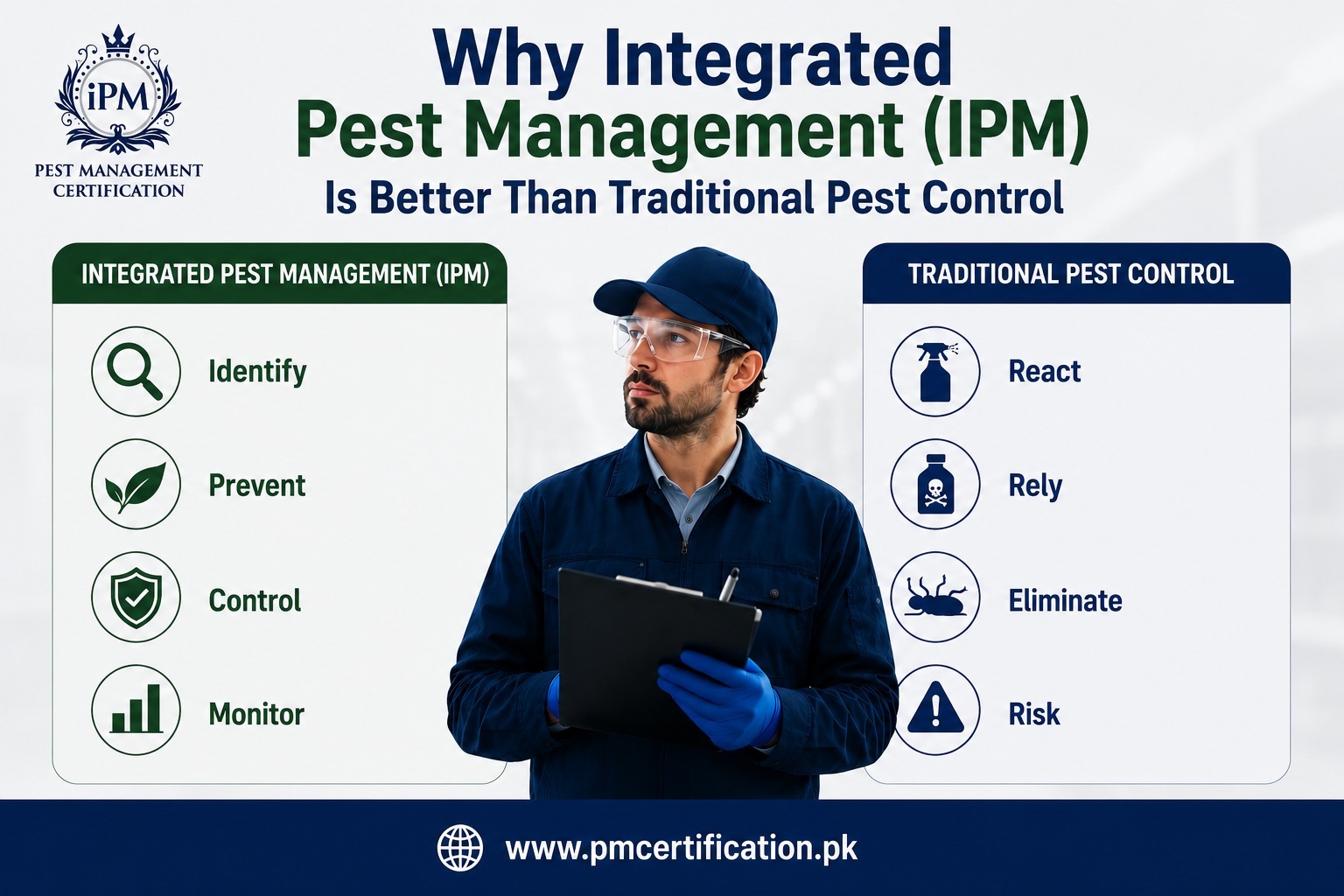
The continuous growth of the pest control industry requires competent and responsible pest management professionals. The certified technician program provides technicians with the necessary knowledge and skills, along with a professional background, allowing them to deal with all pest-related problems more effectively. In light of increasing safety, performance, and accountability requirements, pest control certification becomes an essential element in technician training and education.
Modern pest management is not confined only to pest control; it also involves knowledge about their behavior, identification of risk factors, choosing appropriate control methods, and ensuring the safety of humans and the environment.
Pest management certification is dedicated to providing quality training and certification in the field of pest management, which helps enhance the skills of the participants within the industry. As a result of IPM training, technicians may develop practical pest management skills and technical knowledge, along with a broader understanding of their impact on society and the environment.
What Is a Certified Technician Program?
A certified technician program is a formal training and certification process that provides the knowledge and hands-on skills required to successfully work in the pest control business. It sets a solid baseline of knowledge for pest identification, inspection, monitoring, safety precautions and Integrated Pest Management (IPM).
Professional technician certification is intended to provide a level of competence among professionals entering or working in the profession. The certified pest technician is trained to practice pest management based on knowledge and principles, not just non-scientific experience, by applying good practices in a real-world pest management situation.
Consistent pest technician training promotes uniformity in knowledge, safety and quality of service. Structured IPM training teaches technicians a system of dealing with pest problems and to think about the impact of their activities on people, property and the environment. This is in line with the IPM training mission to prepare competent individuals and to elevate the standards in the pest management field.
Why Does the Certified Technician Program Matter?
In order to provide successful and responsible pest management services, it is important for pest control technicians to be able to apply proper technical knowledge, skills, and safety measures to the job. Yet many technicians begin their careers without any prior technical education or preparation. To address this problem, the program for technicians was created, which provides comprehensive practical training that helps improve technicians’ field skills and safety practices.
Increasing Industry Standards
In today’s world, pest management demands specialists with the skills to recognize pest issues, evaluate risks, and decide on the most appropriate control techniques. Technician certification provides uniformity of knowledge and skill and enables the creation of a team of competent pest management professionals.
International Career Opportunities
A Certified Technician Program (CTP) improves the professional standing of a pest control technician and gives rise to international career opportunities. CTP education includes essential skills, expertise, and safety measures that could prove useful for technicians applying for jobs in international locations like Dubai and Saudi Arabia. Such a program can be useful for technicians to prove their professional skills when applying for pest management jobs and career prospects in the Gulf region.
Environmental Protection
Without the right pest management knowledge, a technician might apply pesticides excessively or neglect the right PPE, posing risks to the health of the family or inhabitants as well as to the environment. The Certified Technician program equips technicians with the necessary skills and knowledge that will allow them to make sure pesticides are applied safely.
Importance for Pakistan’s Growing Pest Management Sector
The pest management industry in Pakistan requires trained technicians who can provide trustworthy services with proper safety precautions and professionalism. One way to solve this problem is to create a CTP for pest management professionals that produces competent technicians who understand pest management and are knowledgeable about current IPM principles. This helps technicians’ professional development and fosters the ongoing advancement of the pest control sector in Pakistan.
Eligibility Criteria
The Certified Technician Program (CTP) is specifically aimed at pest management technicians who have more than one year of verifiable experience in the field of pest control and are qualified to apply restricted-use pesticides in their state. In order to be admitted to the program, candidates need to pass an online IPM knowledge examination, submit two professional reference letters, and pay the application fees that will cover the costs of the certification and exam.
Core Skills Covered in a Certified Technician Program
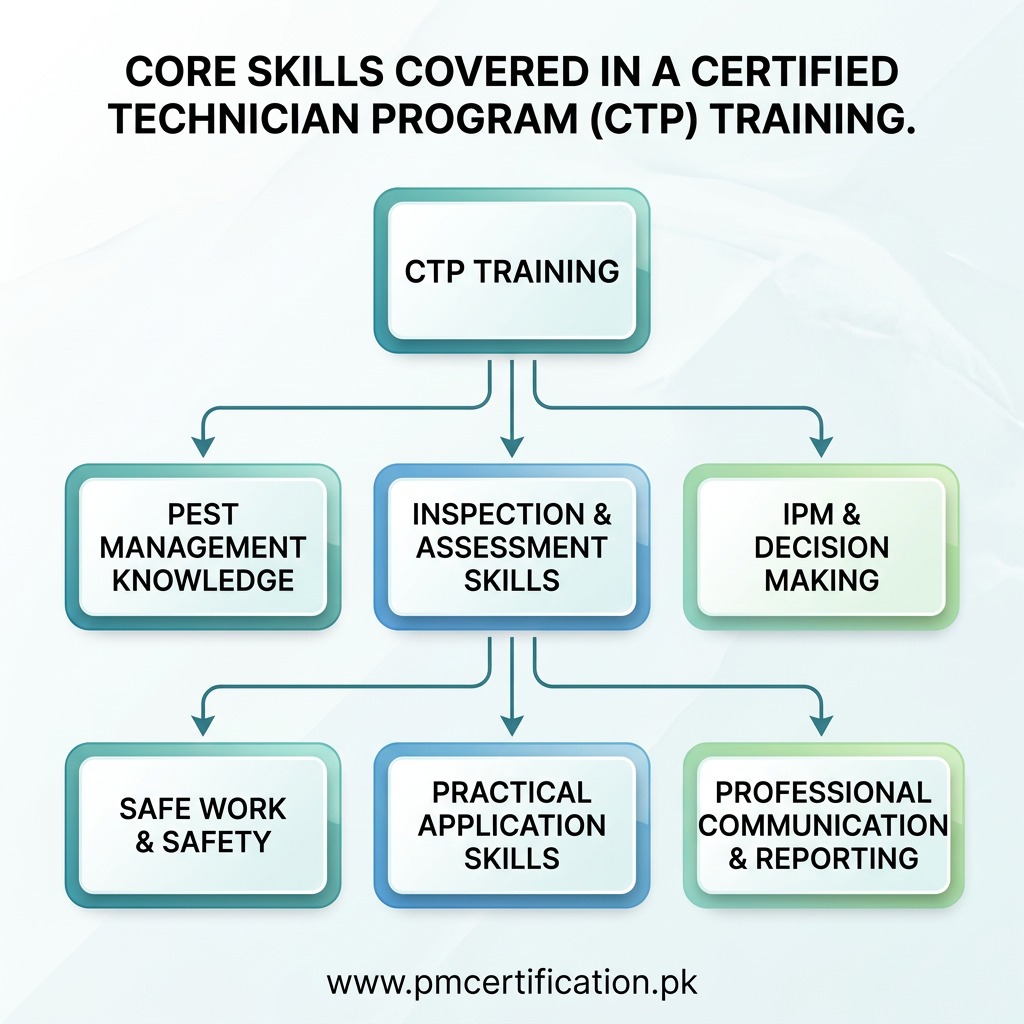
A Certified Technician Program (CTP) provides practical knowledge and professional skills needed to perform pest management work safely and effectively. The emphasis of the training is on pest identification and biology, Integrated Pest Management (IPM) and the principles of IPM, inspection and monitoring methods, safe handling and application of pesticides, proper use of PPE, and pest management documentation. The essential skills enable technicians to gain a better understanding of the pest, determine the point of infestation, choose the right control measures, reduce unnecessary pesticide usage and ensure safe and professional pest management practices.
Pest Identification and Biology
Techniques are developed to identify common pest species and basic pest biology, behavior, habitats, and life cycles. Professionals use this knowledge to identify the cause of an infestation and decide on a management approach to effectively and safely control the pest problem.
Integrated Pest Management (IPM) Principles
IPM offers pest control technicians a methodology for the identification, evaluation, and management of pest problems. It avoids the heavy reliance on chemical treatment and emphasizes the use of inspection and monitoring, pest exclusion, sanitation, and pest management instead, depending on the particular scenario. IPM enables technicians to make proper treatment decisions, reduce unnecessary application of pesticides, and offer effective pest management services.
Inspection and Monitoring Techniques
The first step in a good service is a good inspection. Technicians gain knowledge of when pests are active, where they are likely to harbor, how to determine infestation levels, and how to monitor pests. These skills aid in accurate decision-making and better control.
Safe Pesticide Handling and Application
Safe pesticide handling is an important part of professional pest control training. Technicians are introduced to safe storage, transportation, preparation, application, and disposal practices. Focus is on product labels, safety procedures in the workplace and responsible application methods.
Use of PPE
Proper use of the correct PPE reduces the risks of exposure to harmful chemicals such as pesticides, as well as other occupational hazards. Technicians must use PPE such as protective clothing, chemical-resistant gloves, safety goggles, respirators, and safety shoes correctly.
Documentation, Reporting, and Customer Communication
Records and communication are also essential for professional pest management. Technicians are taught to record and communicate inspections, treatments, observations, and recommendations to customers clearly. These skills aid transparency, service quality and professionalism in the pest control industry.
How a Certified Technician Program Improves Pest Control Services
A good certified technician program assists technicians in better applying their knowledge in real service scenarios. The program has a combination of technical learning and practical pest management training to help enhance service quality, safety, and consistency in various pest management scenarios.
Better Inspections
Effective pest management is based upon proper inspection. Pest technician training teaches pest technicians how to recognize signs of pest activity, determine the amount of infestation, look for favorable conditions, and find possible entry or harborage sites.
Safer Pesticide Use
Certified Technician Program assists the technician in applying pesticides in a safe manner through appropriate product selection, dosage, application and wearing of personal protective equipment. This program minimizes the chances of overapplication, excessive overapplication, and misuse of pesticides. It ensures that the services provided are both safe and efficient.
Reduced Treatment Failures
Technical knowledge is important to the technician for determining the specific causes of pest infestations instead of just the symptoms. The application of integrated pest management principles such as inspection, monitoring, sanitation and exclusion, as well as appropriate control methods, increases the effectiveness of the treatment and minimizes repeated service failures.
Improved Customer Satisfaction
Professional service is not just about pest control. Once pest control technicians are properly certified in an appropriate pest control program, they share what they have discovered, explain the steps they recommend, record their activities, and offer practical solutions for prevention to their customers. Effective communication and uniformity of service create customer confidence and satisfaction.
Sustainable Pest Management Practices
The Certified Technician Program teaches technicians sustainable pest management concepts, with a strong focus on inspection, monitoring, prevention and targeted control. It minimises the use of unnecessary pesticides, contributes to pest management services that are safer for both people and the environment and will provide effective and long-term pest management.
Benefits of Certification for Pest Management Professionals
Professional certification can be of great benefit to people in the pest control field. A certified technician program provides a framework for technicians to enhance their technical skills, hands-on skills, and workplace confidence, and stay updated on industry demands.
Improved Technical Competence
A pest management certification program can help technicians develop a greater knowledge of pest identification, pest inspection, pest monitoring, pest control techniques and safety protocols. This enables them to tackle various pest problems in a more systematic and logical manner and make decisions accordingly.
Greater Professional Credibility
Successful completion of a recognized pest control certification reflects competence and professionalism. A certified pest technician is a person who has been trained through a structured program and recognizes responsible pest management practices for the benefit of the employer and customer.
Stronger Career Opportunities
There are many benefits to a technician certification, the main one being that it can help with career advancement by providing individuals with extra knowledge and credentials to showcase their skills. It can be particularly valuable for technicians seeking advancement or exploring opportunities within the wider pest control industry.
Increased Workplace Safety
Professional pest control training includes safe pesticide handling, PPE, application practices and other important safety protocols. Properly understanding these areas can decrease the number of unnecessary risks that technicians encounter in their daily work in the field.
Benefits for Pest Management Companies
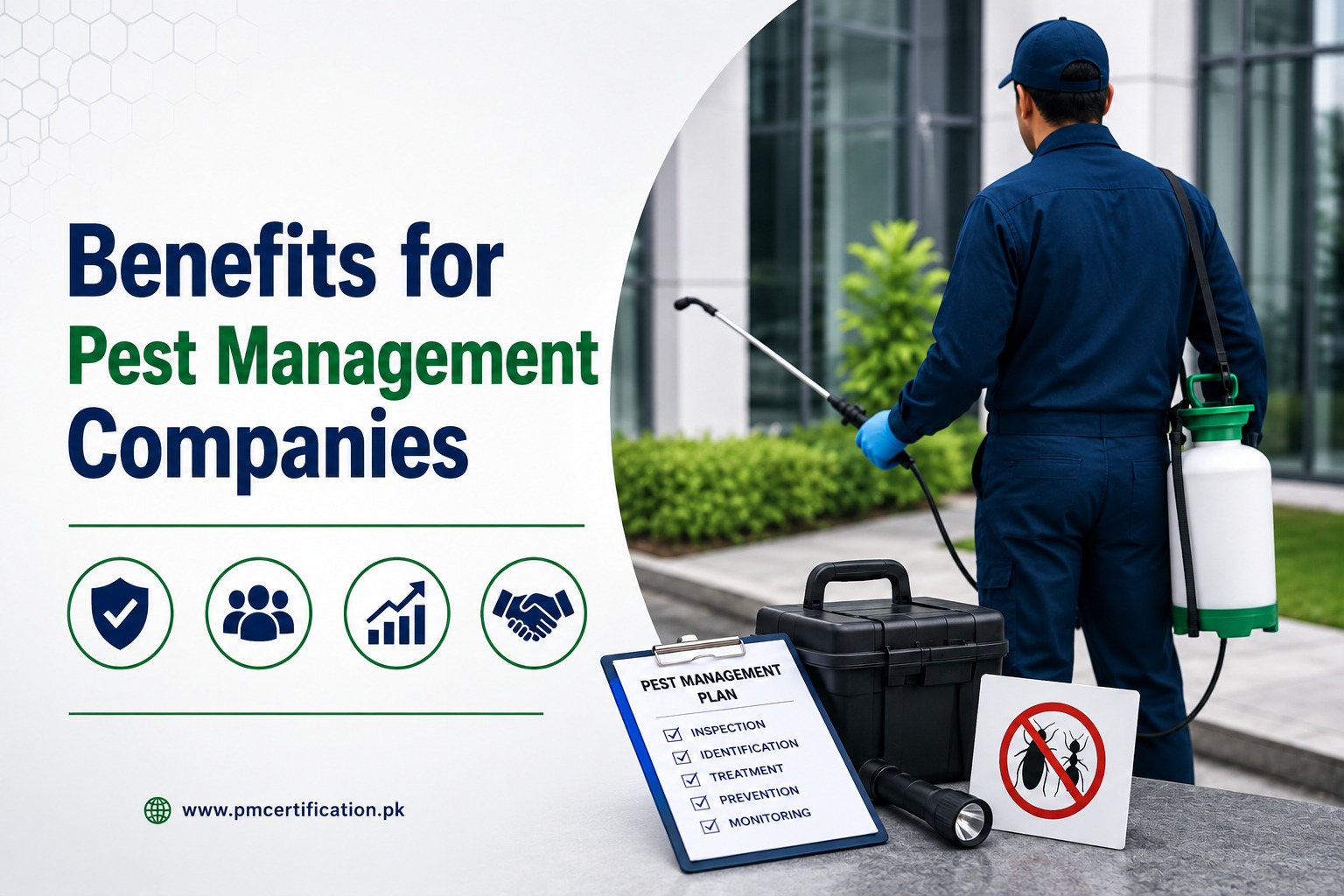
A certified technician program is advantageous to pest management firms since it helps in providing quality services, minimizing operational risk, and encouraging professionalism. This allows certified technicians to provide safe and effective services to clients, thus satisfying their needs and improving their reputation.
1. Higher Service Quality
A certified technician program is designed to train companies to have technicians who have better technical knowledge and skills. With adequate pest control training, they can perform more effective inspections, make accurate pest activity determinations, and implement appropriate management techniques to ensure effective service delivery.
2. Better Customer Retention
Properly trained pest management professionals can offer increased communication, precise accounts of services provided and better solutions. Providing the company with consistent and professional services creates trust in the company, which can foster long-term customer relationships.
3. Reduced Operational Risks
Structured pest management training ensures technicians have an understanding of safe pesticide handling, personal protective equipment and how to apply pesticides, as well as potential workplace hazards. This information can help minimize unnecessary errors and contribute to a safer workplace for customers and the environment.
4. Improved Regulatory Compliance
Technician certification is designed to lay the groundwork in responsible pesticide use, safety practices, record-keeping, and other professional needs. They are better equipped to adhere to procedures and enable their enterprises to keep in compliance with proper standards.
5. Stronger Company Reputation
Using certified pest technicians shows a company’s commitment to competence, safety and professional service. Technician development investment can boost customer and business partner confidence and distinguish a company in the pest control industry.
6. Consistent Service Standards
Standardized pest technician training programs can help standardize the way technicians perform the tasks of inspection, monitoring, treatment, documentation and customer communication. Integrated pest management (IPM) program principles can be integrated throughout the team to further aid in effective, responsible and professional pest management services.
The Growing Need for Certified Technicians in Pakistan
As the number of cities and industries has increased in Pakistan, there is a need for highly skilled professionals who can deal with the problem of pests. The certified technician program can help to equip these technicians with modern IPM practices and safety issues.
1. Urbanization
Rapid urbanization results in increased housing and commercial property development, which leads to an increase in pest issues. A team of trained pest control technicians is required to survey properties, detect the presence of pests, and implement the necessary pest management.
2. Food Safety
It is important for food organizations to have efficient methods of preventing pest infestations in order to make sure their products are not damaged or tainted. Pest management training allows pest technicians to understand the basic concepts of pest inspection, surveillance, sanitation and directed pest control.
3. Healthcare Facilities
Care must be taken in the management of pests in hospitals and health care facilities because hygiene and public safety are paramount. Certified pest technicians use the appropriate inspection and control procedures while taking the sensitivity of these environments into consideration.
4. Commercial High-Rise Buildings
As more commercial high-rise buildings are being built, many new management issues arise for pests. By correctly training pest technicians, they can detect entry points, harborage areas, and other factors that may be conducive to pest activity in a large building.
5. Public Health Initiatives
Effective pest management can be used to complement and aid public health programs in managing pests that could pose a threat to public health and sanitation.
Frequently Asked Questions
A certified technician program is a pest management training program that is structured to build up the technical knowledge and practical skills required to work professionally in the pest control field.
The Certified Technician Program (CTP) is ideal for pest control technicians, field staff, and individuals with at least one year of technical pest management knowledge who want to improve their skills and earn professional certification.
The programme covers practical pest management skills, pest identification, inspection and monitoring methods, IPM principles, safe handling of pesticides, use of PPE and professional service procedures.
The certification program enables technicians to use the appropriate pest management practices, safely use pesticides, apply IPM principles, and deliver better, more consistent and environmentally sound service.
CTP can aid career progression in the pest management sector and can facilitate experienced pest management technicians to explore opportunities in international markets such as Dubai and Saudi Arabia based on employer and local regulatory needs.
The Certified Technician Program (CTP) is available in both in-person and online formats, a 14-day training program focused on practical pest management skills, including field-based learning and professional technician development.
Conclusion
Professional technician certification plays a critical role in enhancing the quality, safety, and reliability of pest management services. The Certified Technician Program (CTP) enhances the practical application of the skills, knowledge, and application of Integrated Pest Management (IPM) by technicians to provide a more environmentally sustainable, effective, and safer service.
Continuous professional development enhances the skills of technicians and elevates the professional standards of the whole pest management industry in Pakistan. Pest Management Certification (Pvt) Ltd. offers the CTP training course to enable working pest control professionals to build their skills, advance their careers and help the pest management industry become a more professional and skilled profession.