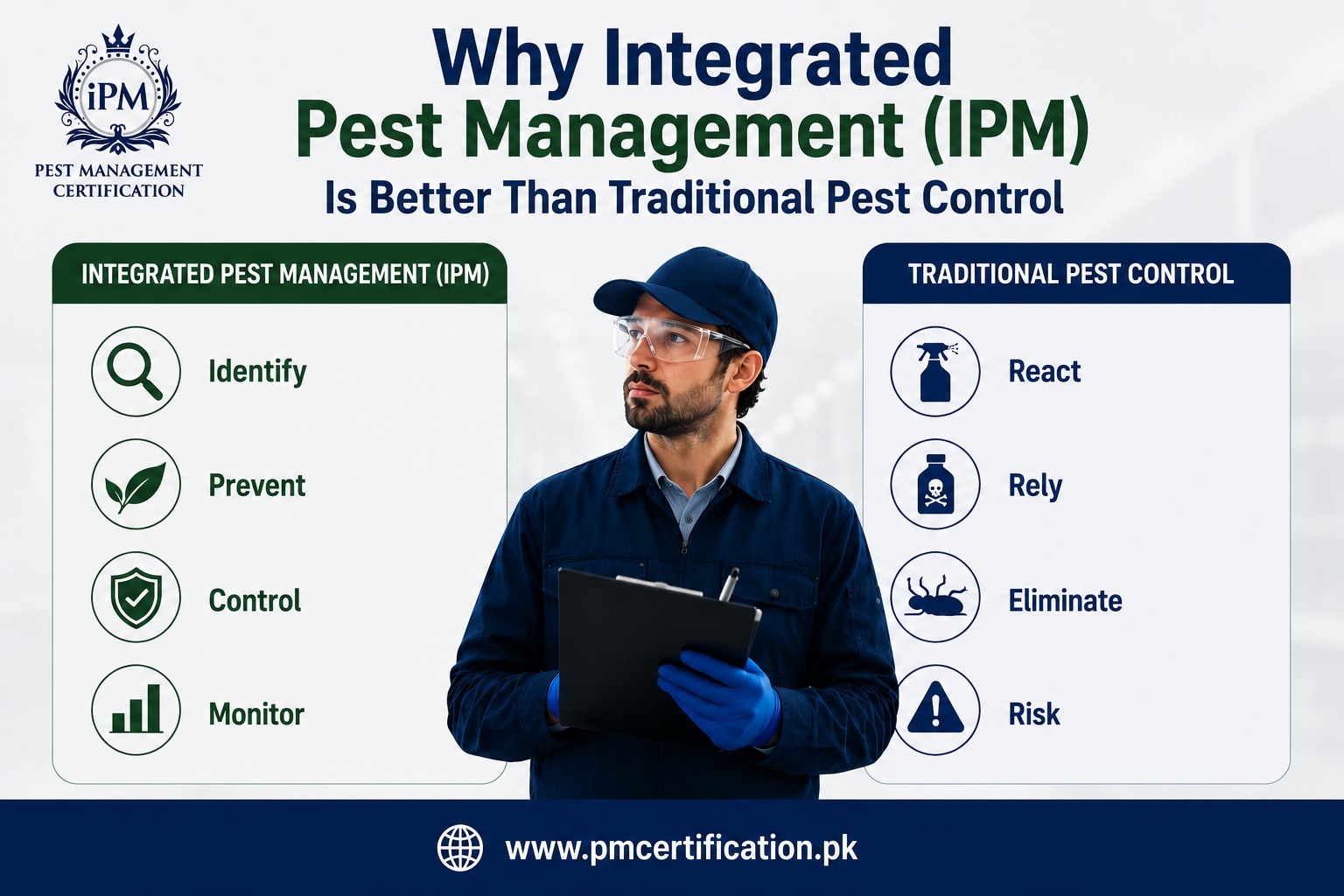
Stored agricultural grains and tobacco cause significant losses to the food and agriculture industry each year before anyone realises the stored product pest problem. To control stored product pests, you need more expertise and professional treatment. This is the reason you must know all about pests and how a professional overcomes the stored product pest problem. With getting enrolled in Integrated Pest Management Certification, you also learn professional knowledge about methods and tools for controlling stored product pests, ensuring food safety, and minimising reliance on chemical controls.
In this blog, you explore why stored product pests are a big challenge, why management requires IPM certifications and how, as a professional, you build a long-term and sustainable pest control solution in food storage and in the processing operation.
Why Stored Product Pests Are a Unique Challenge
Stored product pests differ from common structural pests in that they have an environment with plentiful food, limited access for inspection, and conditions frequently controlled in ways conducive to pest survival. Grain bags, stacked cartons, and closed storage bins provide breeding grounds, and limited visibility makes early detection a true challenge. Pest management professionals who are trained in pest management certification programs understand the need to consider more than just pest activity; rather, they must analyze pest risk factors, including storage structures, airflow, temperature, and product movement.

How Stored Product Pests Damage Food and Commodities
Stored product pests cause several types of damage to commodities. Some species consume grain or processed food directly, leading to weight loss and reduced food quality. Others infest products with webbing, frass, shed skins, or dead insect parts, and the food is considered unfit for sale even if they have not reduced the food in quantity. Such contamination in flour mills and food processing facilities can result in product recalls, shipment rejections, and significant reputational damage.
Hidden Infestations and Their Economic Impact
A major problem with stored-product pest control is that infestations can start where no one is looking, such as within stored-product bins, under pallets, or below bulk grain. When symptoms are noticed, pest infestations are often well established. The economic impact is not just on the damaged product, but also on the cost of cleaning up the site, the loss of product shipment, regulatory fines and penalties, and lost client trust. This is why certified professionals must be trained to recognise problems before they become issues.
The Importance of Early Detection
Early detection is the most important part of stored product pest control. IPM-trained individuals learn to inspect for small holes in packages, the musty odour, insect activity near lights, or low-temperature changes in stored grain (and if other staff members don’t see them). Pheromone traps are an integral part of this process and provide a way to monitor insect activity at levels far lower than can be seen with the naked eye, utilising species-specific lures.
Monitoring the catches made in traps over time helps identify the sources of an infestation, to keep track of pest populations, and to determine if a treatment is successful. Consistent monitoring of the traps coupled with these early warning signs means that even if infestations get to a point where large scale intervention is required, low impact solutions can be used.
Key Components of an Effective Stored Product Pest Management Program
A successful IPM program is based on consistent, documented practices, not on treatment. Certified professionals are trained to develop programs that incorporate prevention, monitoring, and corrective actions into a continuous program.
Routine Inspection and Monitoring
Inspection is the foundation of all grain pest management or food storage programs. This entails verifying incoming goods, storage facilities, equipment, and packaging at a specified time. It is consistency, not intensity, that is important; the more frequent and well-structured the inspection, the sooner issues will be identified and dealt with.
Sanitation and Good Storage Practices
Improved sanitation directly reduces the amount of food available and the breeding grounds for stored-product pests. This will involve quick clean-up of spills, sealing of cracks and gaps, adequate rotation of stock, and removal of residue build-up from storage spaces. Further, good storage practices, including lifting pallets and not over-stacking, further restrict access to commodities by pests.
Environmental Monitoring
Pests are affected by temperature and humidity. Many stored-product insects breed more rapidly in warm, humid conditions, so certified professionals carefully monitor these conditions. One of the most effective non-chemical tools in the warehouse pest management arsenal is sometimes adjusting storage conditions.
Record Keeping
Good documentation is an important component of professional IPM training. This includes keeping a record of observed infestations, the techniques used to control them, and the outcomes of the treatments. These records provide evidence over time, for audits, and to help guide decision-making in future pest management.
Common Stored Product Pests Every Professional Should Know
When hiring a professional they will be able to identify the species in detail, a non-professional will be more familiar with the pest groups than they will be with the stored-product species. Some of the more common detailed stored product pests which you must be aware of:
- Beetles: Beetles are among the most common stored-product insects that infest grain, flour, packaged products, and dried fruit. Common species are red flour beetle (Tribolium castaneum), confused flour beetle (Tribolium confusum), sawtoothed grain beetle (Oryzaephilus surinamensis), cigarette beetle (Lasioderma serricorne), drugstore beetle (Stegobium paniceum), and warehouse beetle (Trogoderma variabile).
- Moths: A number of moth species are known to attack stored grain and processed food products; moths in the packages are frequently in the form of webbing or larvae. Indianmeal moth (Plodia interpunctella), Mediterranean flour moth (Ephestia kuehniella) and Angoumois grain moth (Sitotroga cerealella) are the most common vector.
- Weevils: Weevils are particularly related to whole grains and cereals, where they bore directly into them as they are developing. The most common are the rice weevil (Sitophilus oryzae), granary weevil (Sitophilus granarius) and maize weevil (Sitophilus zeamais).
- Secondary Pests: Secondary pests consume materials that have previously been consumed by the primary pests, or mold and fungus that develop on badly stored material. These are psocids (booklice), and mold mites (Tyrophagus putrescentiae).
Applying Integrated Pest Management in Rice Mills
Packed rice is the most vulnerable point for a pest attack when it reaches the warehouse or godown. If not managed properly, infestations may occur rapidly in stacked stock and are known to have an impact on the quality and shelf life of the products. During the IPMC training, the professionals learn how to handle this very situation in a step-by-step and structured way:
- Stock Entry Inspection: Upon receipt, each lot of packed rice is inspected for any evidence of activity from insects and/or webbing, as well as torn packaging, and then only released into the stock if safe.
- Separation of Suspect Stock: Infested bags are isolated at once and kept for treatment or rejection and not mixed with clean bags.
- Pheromone Trap Placement: Torios Multi Pheromone Traps are placed throughout the storage area to monitor pests at an early stage. These traps are used for regular monitoring in the presence of pests and even when the infestation may not be visible.
- Storage Conditions: It is observed that due to the presence of moisture and temperature in the godown, the activity of pests and spoilage in stored rice is facilitated; hence, these conditions are monitored closely.
- Ongoing Monitoring and Spot Treatment: Targeted application of pesticides in spot treatments within a zone of pest activity, based on trap data and/or inspection findings, rather than applying a pesticide throughout the entire warehouse.
- Sanitation and Recordkeeping: Storage areas are routinely cleaned, and all storage trap findings and inspections are recorded to see trends over time.

This procedure demonstrates a step-by-step approach that we teach professionals at IPMC from stock entry to safe, monitored storage using practical and low-impact methods such as pheromone traps, rather than reactive and large-scale treatment methods.
How Certification Improves Decision-Making in the Field
Integrated Pest Management Certification is not just about identifying pests; it’s about how people think about pest problems and how they will solve them in the field. With the help of getting certification, you become a professional in the pest industry. Here are some benefits that you must know about the certifications.
Making Evidence-Based Pest Management Decisions
Certified professionals learn to make decisions based on inspection data, pest thresholds, and environmental conditions instead of on a routine basis. Such evidence-based practice results in more precise treatment decisions and improves long-term outcomes.
Reducing Reliance on Routine Pesticide Applications
Certified professionals, rather than opting for pre-scheduled chemical treatments, rely on monitoring data to determine when action is needed. This reduces the need for pesticides, costs, and pest population resistance.
Supporting Food Safety Compliance
Food facilities are regulated, and documented IPM practices are integral to the audit and inspection process. Certified professionals know how to ensure that pest management records comply with food safety requirements, thereby reducing the compliance risk for the business they support.
Career Opportunities for Certified IPM Professionals in Stored Product Pest Management
A recognized pest control certification will open up opportunities in a variety of industries that rely on professional and consistent pest control:
- Food manufacturing & processing facilities, where the risk of contamination is critical and requires close monitoring.
- Constantly needing to monitor the grain stored and finished product, flour mills,
- Bulk material warehouses that house raw materials as well as consumer goods, packaged or otherwise.
- Import and export facilities, where pest-free certification is sometimes needed for exportation.
- Seasonal grain and produce storage facilities, agricultural storage facilities.
Quality assurance departments where knowledge in pest management can be used in compliance activities. Certification is a sign of credibility and technical expertise for employers in these industries and for professionals seeking to develop careers in pest management.
10 Best Practices for Long-Term Storage Without Pest Infestation
- Regularly scheduled inspections of all storage areas are conducted.
- Educate workers about warning signs of pest infestation.
- Implement consistent inventory rotation FIFO (First In, First Out).
- Check and adjust moisture content in the storage area.
- Follow thorough floor, bin, and equipment-cleaning routines.
- Set up and inspect monitoring equipment (e.g., pheromone traps) regularly.
- Properly control temperature and humidity of commodities.
- Close gaps in the structure and cracks in the building that allow pests to enter.
- Maintain detailed, ongoing records of inspections and treatments.
- Check pest information regularly for any hot spots.
If you are interested in learning more about pest management, then IPM certification is the right path for you, whether you are looking for stored-product pests. With different certification programmes like Certified IPM Entomologist (CIE) and Certified Technician Program (CTP), you can easily become a pest professional just by joining today by visiting pmcertification.pk, and be ready to scale up your career as a pest control professional.
Frequently Asked Questions
One of the challenges with stored-product pests is that they tend to live and reproduce in the bulk commodity or storage area, well beneath the surface, making them difficult to detect until infestations are large. They are also small, reproduce quickly, and can hide in cracks and packaging, making control efforts difficult.
Certification programs train in structured inspection techniques, pest biology, environmental monitoring, and documentation practices, enabling professionals to detect and address infestations early and effectively.
Grain Storage, food processing and manufacturing, warehouses, logistics, pharmaceuticals, retail, and grocery stores are businesses that need protected and compliant stored product pest management programs.
Prevention goes to the root of the pest problem and helps prevent a pest infestation from even getting started. At the same time, treatment is an expensive, time- and labor-intensive process that occurs after a pest problem has developed and is more likely to cause product losses and compliance risks.
Common symptoms are small holes in packages, fine powder residue around stored grain, webbing in corners or cracks, musty smell in storage areas, and insect activity near lighting or storage bins.
Final Words
Finally, you know that stored-product pest management should be more than just tests and treatments when needed; it requires a structured, knowledge-based approach, and certified professionals are best suited to provide it. Integrated Pest Management Certification provides practitioners with the hands-on knowledge required to identify infestations early, implement treatments to address specific problems, and assist with food safety compliance in mills, warehouses, and processing facilities. One of the best things anyone can do for a successful and future-proof pest management career is to invest in the right IPM certification. Contact us today at +92 337 9923383 to learn more about the certification details and join us today to start your career journey in pest management.