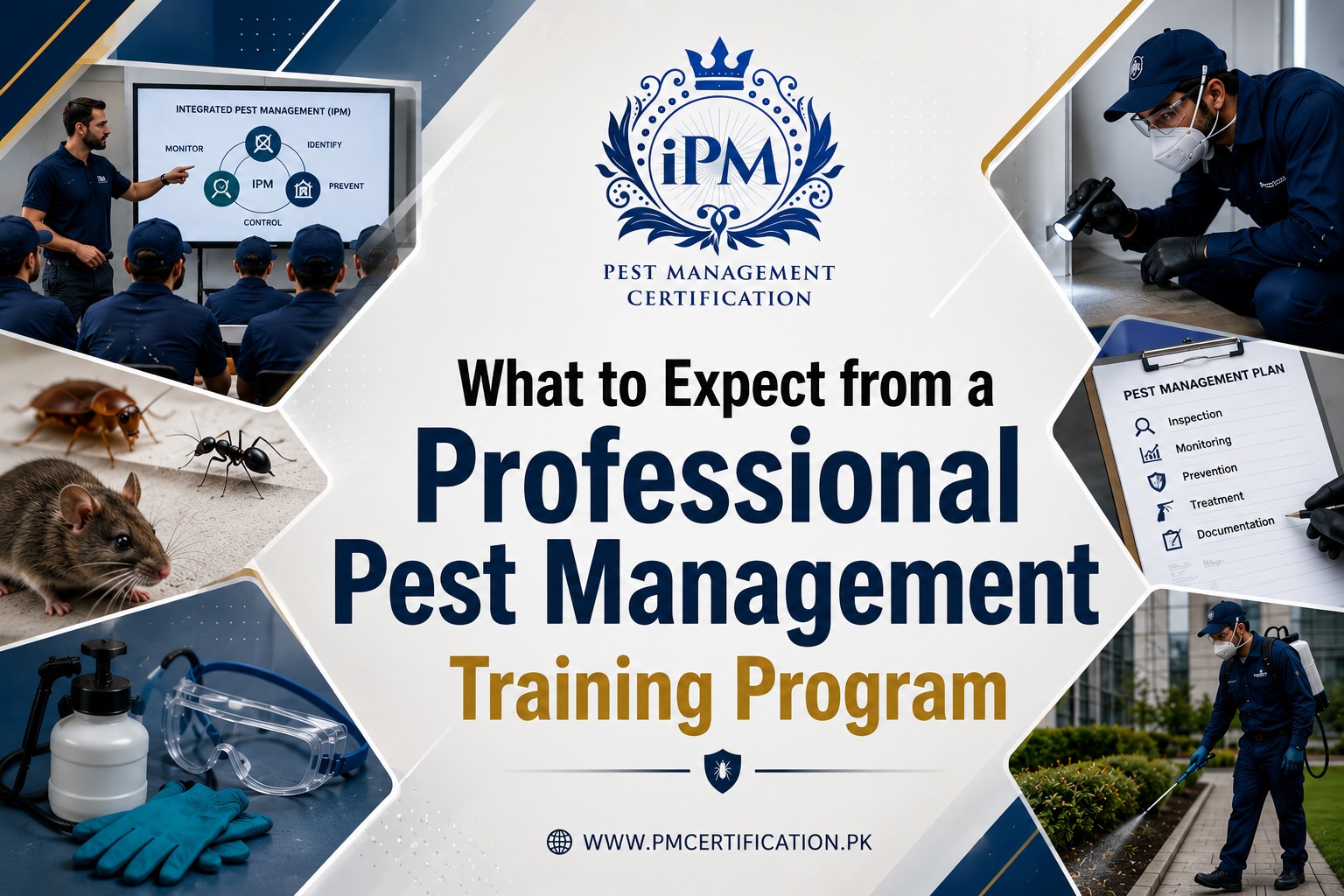
A professional pest management training program gives people the knowledge and practical skills they need to handle pests in a safe, effective, and responsible way. The demand for qualified pest management professionals continues to grow, with structured pest management training being a necessary part of industry standards for the health and safety of the people, property, and the environment.
Participants in these programs get classroom training and practical, hands-on practice to build technical skills and prepare for pest management certification. Completion of professional training also presents chances for a job in the residential, commercial, agricultural, and public health sectors and is a valuable step toward a successful career in the pest control industry.
Why Professional Pest Management Training Matters
With professional training in pest control, we provide people with the information and practical skills needed to manage/control pests in a safe, effective, and responsible way. A systematic training program gives the learners an awareness of pest biology, inspection processes, management approaches, and principles of Integrated Pest Management (IPM). Well-trained technicians can accurately find out pest problems and apply the relevant treatment measures to control the pest problem.
Training also prepares the students to comply with pest management rules, industry standards, and safe work practices. They learn how to correctly apply pesticides, how to inspect for pests, and how to safely control pests. This training will help to keep people and property safe and in line with the law and the environment.
Also, trained professionals can provide superior quality services and make informed selections in the field. A pest management certification shows professional competence, opens doors to more employment prospects, and encourages continuous education and awareness to keep pace with new technology, legislation, and pest management best practices.
Core Topics Covered in a Pest Management Training Program
These trainings are comprehensive combining theory and practice, providing learners with the skills and experience to solve real-world pest management problems. They cover major field relevant topics that establish strong pest control skills, safe work habits, and pest prevention tips highly helpful in residential, commercial, agricultural, and public health settings.
Pest Identification Training
It provides participants with the skills to identify common insect, rodent, and other pest species through their appearance, behaviour and evidence of infestation. The first and most important stage in selecting the most successful and appropriate pest management plan is accurate identification.
Pest Biology and Behavior
This knowledge of pest biology and behavior allows workers to know how pests grow, reproduce, feed, and survive in many different conditions. Using this data, entomologists may estimate pest activity and develop control solutions following the principles of integrated pest management (IPM).
Pest Inspection Techniques
Good pest inspection techniques enable experts to find infestations, identify entrance points, assess damage, and pinpoint the variables contributing to pest problems. Data from complete examinations form the basis for specific treatment strategies.
Pest Monitoring Methods
Commercial pest control experts who train at IPMC can do a job of putting pest control strategies into practice in places like offices, hotels, restaurants, warehouses, hospitals and food factories. When they get certified, they can use that certification to advance their careers in professional settings around the world.
Pest Prevention Strategies
Good pest management is always about preventing pests from causing trouble. People who study insects, called entomologists, learn how to keep themselves safe from pests and the diseases they can spread. They find out the cracks & crevices and close every possible way of pest entrance. Pest prevention is important because it helps us avoid problems with pests.
Safe Pesticide Application
People who take this training will learn how to pick pesticide products. They will also learn how to read the labels on these products and understand what they say. Pesticide training covers the use of personal protective equipment, which’s very important. This equipment helps keep people safe when they are using pesticides. The training also teaches people how to figure out the amount of pesticide to use.
For example, imagine a pest control technician or a household owner who does not know much about pesticides. This technician might use too much pesticide in a house where people live. This is very bad because it can hurt the people and pets who live in the house. They might get asthma. Have problems with their nerves. They might even get allergies. If this happens regularly, a lot of pests can develop resistance against the pesticides. They will not work anymore. So people need to know how to use pesticides accurately. People need to know about pesticide application to protect themselves and their families from harm.
Understanding Integrated Pest Management (IPM)
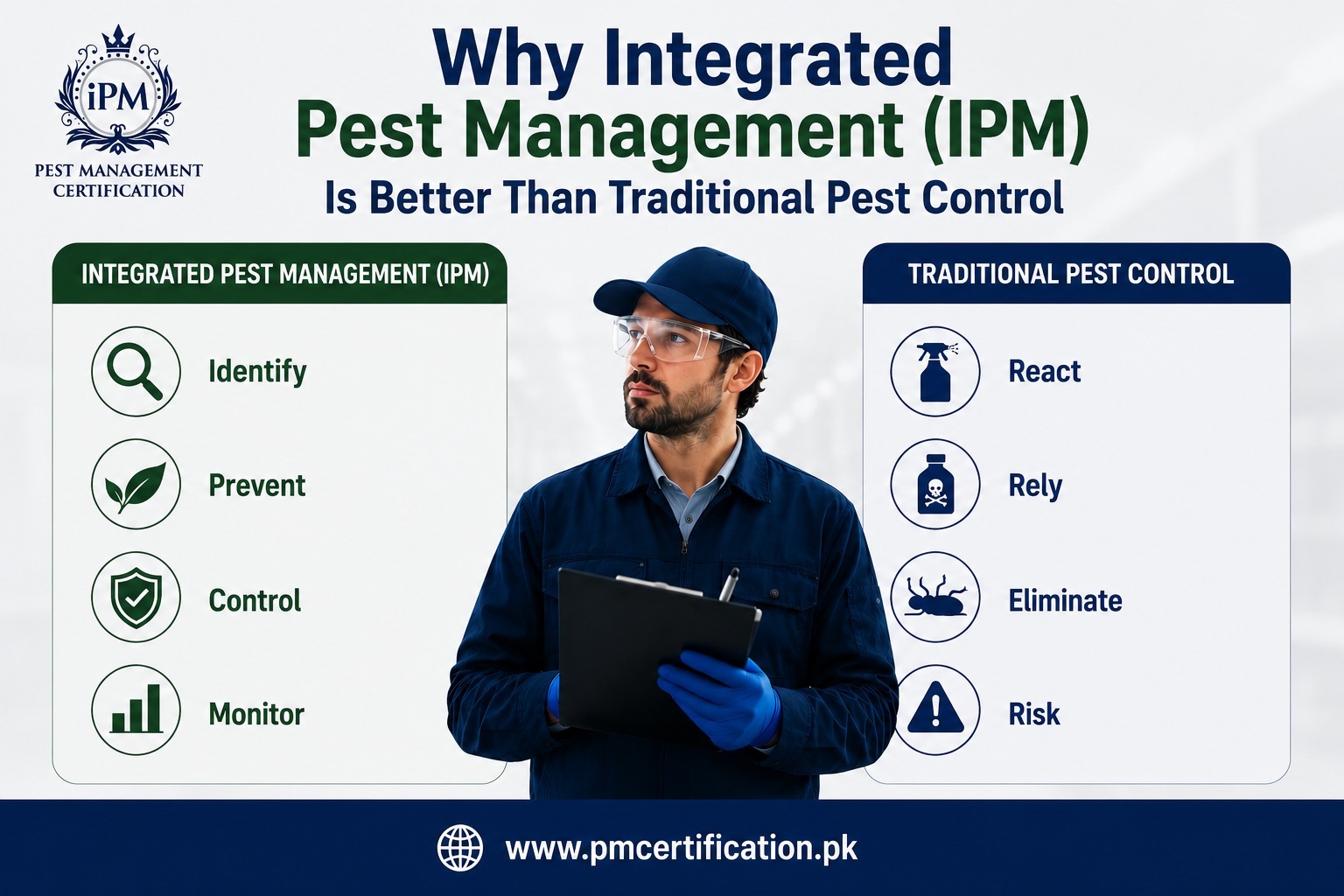
Integrated pest management or IPM is a way to control pests. It uses what we know about pests and how they live to stop problems before they start. This approach focuses on finding pests watching them over time and taking steps to prevent or fix issues. It does not just rely on chemicals to kill pests. This helps us use chemicals where they are not really needed. The goal of IPM training is to create long-term solutions for managing pests in a way that’s good for the environment.
Key methods of pest control as per the IPM approach:
The following are the key pest control methods currently in use to tackle pests.
Physical Control:
Use of physical barriers to prevent pests
Mechanical Control:
Use of traps and devices to remove or reduce pests.
Cultural Control:
Modify practices (crop rotation) and the environment to make conditions less favorable for pests.
Biological Control:
Use of natural enemies to suppress pest populations.
Chemical Control:
Use of approved pesticides safely and responsibly as a last resort.

Hands-On Learning and Practical Experience
A well-organized pest management training program combines classroom instruction with practical practice, providing participants the opportunity to put their knowledge to use in real-world situations. Hands-on training is essential for building confidence and training future pest management professionals to safely and effectively solve pest problems in a variety of situations.
Field Training Opportunities
Participants who take part in this program will get to work in places, like homes, offices, farms or places that deal with public health. They will do this as part of the training that happens outside of the classroom. They will have experienced teachers watching over them. This hands-on training is a way for people to see how the things they learn about managing pests are actually used in real life not just in a classroom.
Real-World Pest Management Scenarios
When we are dealing with pests in the world people who are being trained can look at the problem and figure out what works best to get rid of the pests. They can also learn how to use pest management or IPM which is a way of managing pests that considers many different things. This helps people make decisions and gets them ready to handle all sorts of pest problems with integrated pest management.
Inspection and Monitoring Exercises
People taking part in this learn how to spot the signs of pest activity find the places where pests are getting in use tools to monitor the situation and keep track of what they find through inspections and monitoring work. This helps people find pests on and come up with good ways to manage pest problems.
Practical Pest Management Skills Development
People learn a lot from hands-on exercises. These exercises help people develop the skills they need for managing pests. This includes learning how to identify pests, how to inspect for pests how to monitor pest problems and how to use chemicals safely. By doing these hands-on exercises people will get the experience they need to manage pests in an effective way. They will be able to provide pest management services by using the skills they learned from these hands-on exercises like pest management skills.
Pest Management Certification and Industry Compliance
Participation in our trainings is a vital step toward pest management certification and meeting industry criteria. Certification shows that a technician has the knowledge and practical abilities necessary to safely, effectively, and in compliance with professional standards undertake pest management.
Certification Requirements
Students in entomology benefit from professional certification, as it validates their knowledge and hands-on skills in pest management. Many organizations prefer certified experts because they are trained in the principles of integrated pest management (IPM), safe pesticide application, and industry standards. Certification also aids in work chances and long-term career progression in the pest management business.
Regulatory Standards
The professional training provides participants with an understanding of pest management rules, pest control industry standards, and legal duties relating to pesticide use, safety, and environmental protection. Adhering to these standards encourages compliance by industry and provides some protection to human health and the environment.
Continuing Education Requirements
The pest management industry continually evolves as professionals develop new technologies, regulations, and control strategies.. Continuing education for pest management experts allows them to refresh their knowledge, enhance their technical skills, and remain up to speed with the latest practices of pest management in their profession.
Importance of Professional Certification
Students enrolled in entomology programs will be able to obtain professional certification by completing our esteemed program that develops the practical knowledge and abilities needed in the pest control industry. Certification demonstrates that professionals can accurately identify pests, apply Integrated Pest Management (IPM) principles, and implement safe and professional pest management practices. It also boosts job chances and confidence of the employer in their talents.
Skills You Will Develop During Training
A professional pest management training program gives learners the technical knowledge and practical skills necessary to control pest problems efficiently. Trainees study pest control techniques, complemented with vital workplace skills that contribute to the provision of safe, professional, and effective pest management services.
Technical Pest Control Skills
People who take part in this will learn skills for controlling pests. They will get training on how to identify pests, how to inspect for pests, how to keep an eye on pest problems, and how to use pesticides safely. These skills will help people who work with pests to figure out what kind of pest they are dealing with, choose the way to control the pest, and use treatments in a safe way. They will learn pest identification, pest inspection techniques, pest monitoring techniques, and safe pesticide application, which are all important skills for pest control.
Risk Assessment
Risk assessment is about checking how bad a pest problem is, finding out what dangers it might pose, and choosing the ways to deal with it.
This helps technicians to reduce risks to people, buildings, animals, and the environment when they are using pest management strategies.
Communication with Clients
Good communication is really important when it comes to managing pests. When people get training, they learn how to explain what they found during an inspection in a professional way. They can tell people what treatment options are available. They can also give advice on how to prevent pests from coming. They can answer any questions that the clients of pest management have about pest management. This is all part of what pest management’s about.
Documentation and Reporting
Pest management is really important. It needs to be done correctly. When we do pest management, we have to write down what we find when we inspect a place. This means we have to document everything about the pests, like what they’re where they are. We also have to write down what we do to treat the pests and what kind of pesticides we use.
Writing all this down helps us follow the rules for pest control. It also helps us figure out if the treatment is working or not. It helps us plan what we need to do in the future to manage the pests. Good record keeping is essential for pest management. We have to keep track of everything we do, including pest activity and treatment processes, so we can do a job of managing pests.
Problem-Solving and Decision-Making
Every pest problem is unique. Needs to be looked at carefully. People who take part in this learn how to solve problems and make effective decisions.
Career Opportunities After Completing Training
At IPMC, we teach entomology students how to do their job well. Our training sessions give them the skills and knowledge they need to work in the business. This means they have a lot of options for what they can do after they finish the course. When they are done, they can look for work in places like homes, offices, farms, food factories, and places that keep people healthy. They will know how to use pest management or IPM to keep people safe and protect property and the environment. At IPMC, our students learn how to use IPM to control pests in different situations.
Pest Control Technician
Pest control technicians go through a training program to learn how to deal with pests. This training program teaches them what they need to know to work with people in their homes, in offices, and in factories. They inspect the properties, find the pests decide what to do about them, and tell people how to keep the pests from coming. People who work as pest control technicians get to use what they learned about insects and gain experience at the same time. They find it very rewarding to work in the pest management field.
Pest Management Specialist
An entomologist might work as a pest management specialist/trainer or service provider after they finish a pest management training program. When they complete the training, they can do pest inspections. Figure out if there are going to be infestations. This is based on the ideas of Integrated Pest Management. The entomologist can handle pest problems and give clients solutions that are safe and good, for the environment and that will last for a long time. The pest management specialist will use pest management to help people and the entomologist will make sure the pest management is done correctly.
Commercial Pest Management Professional
Commercial pest management professionals, after completing this kind of training at IPMC, can better implement the IPM strategies in offices, hotels, restaurants, warehouses, healthcare facilities, and the food processing industry. After getting certifications, they can use them in more professional settings internationally that grows their career.
Public Health Pest Management Careers
It offers entomology students professional prospects in public health pest management. After impactful learning, they can confidently boost their career with government health departments, municipalities, vector control programs, research organisations, non-governmental organisations (NGOs), hospitals and international public health agencies involved in mosquito, rodent and other vector management initiatives.
Choosing the Right Pest Management Training Program
Selecting the most suitable program is an important step for beginning a successful career in the pest management industry. A quality program should strike a balance between the academic knowledge, practical experience and certification help so that participants can develop the skills and to use their skill an essential for professional success.
Accreditation Considerations
Choose a training program from a reputable university or business group. Companies also value training from accredited pest control courses. These courses are more likely to meet recognised educational standards.
Curriculum Quality
Basic topics include training on pest identification, pest inspection processes, pest monitoring methods, pest preventive strategies, safe pesticide administration and the principles of integrated pest management (IPM) should be included in an effective program. The course is expertly created to offer participants with the technical knowledge and practical understanding.
Practical Training Opportunities
Good pest control training should include actual field training so that participants may apply classroom knowledge to real-life situations.
Instructor Qualifications
The quality of education in the field of pest control is mainly dependent upon the skill of the experienced professors. “Trainers with the right knowledge and hands-on experience may be a valuable resource, providing real-life examples and helping trainees understand what is being done today in pest management best practices.
Certification Support
A quality training program will prepare individuals for pest management certification, including information on certification requirements, tests, and continuing education in pest control. It helps entomologists to meet industry standards and to continue their professional development.
Benefits of Investing in Professional Pest Management Training
The investment in the right session is a long-term benefit for the individual and the pest control industry. Through structured pest control training, participants obtain the information, practical experience, and confidence needed to perform safe, effective, and professional pest management services.
Career Advancement
Pest management certification builds professional reputation and gives prospects for career advancement. Many qualified pest control specialists are in a good position for expanded responsibility and specialized roles in residential, commercial, agricultural and public health settings.
Increased Knowledge and Confidence
Training improves technical knowledge and practical skills in pest management. Participants receive pest identification training, pest inspection techniques, the principles of integrated pest management (IPM), and safe pesticide use and become more confident in dealing with a wide range of pest problems.
Improved Service Quality
Well-qualified entomologists are able to properly detect pest problems and suggest appropriate treatment solutions for the clients and implement effective control measures against on the pest problem. Best management practices for pest management lead to higher quality service, more customer satisfaction, and long-term pest avoidance.
Better Compliance with Regulations
Professional training means a firm awareness of pest management rules, industry standards, and pest control safety training requirements. This knowledge helps technicians to operate responsibly, to preserve legal compliance, and to protect people, property, and the environment.
Long-Term Professional Development
New technology and control strategies are constantly emerging in the pest management sector. Relevant individuals continuing their education are able to maintain their knowledge and tackle pest problems, enhance their skills, and remain productive throughout long-term careers.
Frequently Asked Questions (FAQs)
A professional pest management training program is a structured educational course that teaches pest identification, inspection techniques, integrated pest management (IPM), safe pesticide application, industry regulations, and practical pest control skills.
You can expect both classroom-based learning and hands-on training covering pest biology, monitoring methods, prevention strategies, safety procedures, industry compliance, and real-world pest management scenarios.
Pest management training helps professionals develop the knowledge and skills needed to manage pests safely, effectively, and in compliance with industry regulations and best practices.
These programs are ideal for aspiring pest control technicians, entomologists, company owners, IPM practitioners, students, and anyone seeking pest control certification or continuing education.
Most pest management courses cover pest identification, pest biology, inspection techniques, monitoring methods, integrated pest management principles, pesticide safety, regulations, documentation, and client communication.
Final Words
With a right-chosen training program, you will get the information, skills, and confidence to control pests safely and effectively. Comprehensive pest management training provides trainees with best practices for the pest control industry, principles of integrated pest management (IPM), and safe ways for pest control. Certification in pest management adds to professional credibility and helps in job advancement. When pest control specialists choose this type of training program and continue to build their skills, they can provide reliable services while safeguarding public health and the environment.