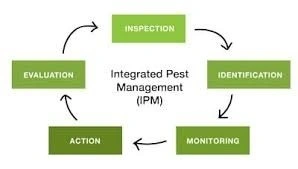
With the increasing of urbaniztion word, proper pest management training is very important for individuals. From urban buildings to commercial settings, impactful pest eradication plays an important role in safeguarding health, residence, and the ecosystem. Now pest elimination is not enlong limited to spraying pesticides. IPM emphasizes eco-friendly, science-based techniques. Institutes like IPM Certification provide proper pest management training to professionals, are strengthening experts with the expertise and skills essential to execute protected, effective, and eco-friendly responsible pest control practices.
With the help of proper training, Professionals master the ability to determine pests properly, implement specific solutions, and apply protective techniques that decrease infestations while reducing pesticide usage, providing long-term protection for people, residences, and the surrounding environment.
Understanding Pest Management Technique
This is a technique used to control pests. The most harmful cause major damage to public health and property. The insect pests include mosquitoes, bedbugs, termites, cockroaches, rodents, and stored product insect pests. These pests are responsible to transmit diseases, structural damage, and contaminating foods. These pest problems can become worse if not controlled, leading to building destruction, diseases, and economic losses. By using monitoring, sanitation, habitat modification, and treatment, the present approach to pest eradication supports the approach to prevention. Managing pests assists individuals, businesses, and communities in maintaining their health, properties, and a clean, safe, and secure living space. It is possible to hire professional termite controllers who help prevent structural destruction.
Importance of Pest Control Training
IPM training is very important for safeguarding urban and commercial settings. Most of pest carries of hazardous diseases. Mosquitoes are disease carring agent in animals. Take action first, before the active. Rodents and termites are responsible for structural damage. Executing proper termite control and rodent control can reduce severe damage. Training institute of pest eradication, like IPM Certification, for technicians to learn technical and safe control methods to implement settings, such as residential and commercial, where public safety is very important. Through proper training, technicians will be able to protect public health, property, and economic loss. The pest control training is also very important for homeowners, because when technicians apply pesticide sprays through training, they know how to safe yourself and their family.
Why Pest Elimination Matters?
Protect Public Health
Through IPM, the public protect by diseases carried by insect pests, such as mosquitoes, rodents, and cockroaches. Bedbugs and mosquitoes are medically very important. Bedbugs cause allergy and irritation to humans. Mosquitoes cause dengue disease. So the proper pest control strategy is for both medically important insect pests. Ades aegytyi insect is a very harmful insect pest. So that is why IPM Certification training is very important.
Prevent Property Damage
With the help of IPM Certification training, professionals learn about termites and rodents control. These insect pests eat things very silently, but they cause damge very serious. The soft-bodied termite feeds on wood. They cause structural damage, like rodents also cause structural damage. Through termites and rodents control training reduced economic loss.
Food Safety
Rodents and cockroaches are contaminating food. Through IPM, technicians control both cockroaches and rodents in a safe way, and also provide food safety to the public.
Environmental Sustainability
With the help of IPM, technicians not only control pests, but promotes safe chemical use. Professionals use natural mosquito spray and natural mosquito repellent against mosquitoes; both are safe to the environment.
What is IPM Certification?
IPM Certification is a training organization which offer urban urban and structural training programs. The Securities and Exchange Commission of Pakistan has registered it. They have qualified experts, and has well record throughout training. Their experts follow IPM training and apply their skills during pesticide application and also protect human health and public property. They control urban pests, including stored- product insects, bedbugs, cockroaches, termites, and rodentsetc.. They provide pest control training to technicians and educate professionals on how to protect ecoystem during pesticide application.
Key strategies of Pest management
Cultural Control
Cultural control is a technique of managing pests that make environment less favourable for pests to breed. It follows proper sanitation, management of waste, and practices of maintenance to minimize pest attraction. The elimination of waste materials is an example of cultural control. Standing water is the most favourable habitat for mosquitoes and also for cockroaches. The use of resistant varieties is another example of cultural control. The removal factors that attract pests, cultural control, reduce chemical sprays, and support long-term pest control solutions.
Mechanical Control
Mechanical control is the term given to the use of physical activities rather than chemicals for controlling pests, weeds, or any other undesirable organisms. It is commonly employed for home pest control, gardening, and farming. In this method of controlling pests, they are physically removed or destroyed. For example, weeds are manually pulled out from the ground; the land is ploughed to remove weeds; rat traps are laid; fences are constructed around the field to prevent animals from entering the field; and the crops are covered with a net to prevent insects from attacking the plants. Mechanical control is a green approach because the use of chemical pesticides is not required. It is safe for human beings and animals, too, if properly employed. However, it is a slow and laborious process compared with chemical methods. It is not effective at times, too.
Physical Control
Physical control of pests, weeds, and hazardous creatures via environmental and physical methods rather than chemicals is referred to as physical control. For the reduction and elimination of the population of insects, physical control methods include altering environmental parameters such as temperature, light, and moisture levels. For example, insects in grains can be eradicated through heat treatment, freezing can eradicate pests, solarization of the soil using plastic sheets can control weeds, and floods can eradicate pests.
Biological Control
Biological control is a safer approach to controlling pests. The IPM certification experts use natural enemies against pests. The natural enemies include ladybird beetles, Trichogramma chilonis, and Green lace wings.
The three main types of biological control:
- Classical biological control: To control pests, the natural enemies are brought from other areas.
- Augmentative control: This type includes increasing/boosting the number of natural enemies that are already available.
Conservation control: To ensure the easiest and natural growth of natural enemies, farmers improve the surroundings or environment.
Chemical Control
Chemical control is the use of chemicals, such as pesticides. against pests. It is the application of chemical substances with the aim of destroying, controlling, or preventing harmful organisms. Pest control professionals usually adopt chemical control measures for residential rodent control, public health, and agricultural activities because they provide quick results.
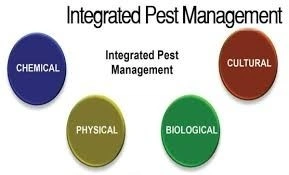
Frequently asked questions (FAQs)
This is a technique to control invasive pests. They follow different strategies, such as cultural control, mechanical control, physical control, biological control, and chemical control. Chemical control is the last option to control the pests.
There are many types of insect pests. However, the most common pests found in the urban sector are cockroaches, bedbugs, rodents, termites, flies, and fleas, etc. These types of pests lead to severe infestation.
Cultural control
Mechanical control
Physical control
Biological control
Chemical control
Termonil is an example of termite control. Other insecticides, like Delt, Premo+, Boradust, and Cypermethrin, are examples of pest control. We mostly use Delt to control flying insect pests.
Conclusion
IPM Certication give professional certified training, and also provides IPM-based solutions topest management for homeowners, businessmen, and emphasizes preventative and sustainable solutions to managing pest problems. This approach minimizes impacts on the environment, health risks, and property damage. IPM is now at the core of modern pest controltechniques because it is a responsible and balanced approach.