In Pakistan, agriculture plays an important role as a significant livelihood for many people relying on crops for sustenance. Many major crops are being cultivated in Pakistan, such as wheat crops, maize crops, rice, sugarcane, cotton crops, etc. However, each year, farmers have issues with insects, pests, weeds, and plant diseases. These issues can harm crops and impact profitability. Luckily by using pest management techniques, we can solve this problem and prevent loss.
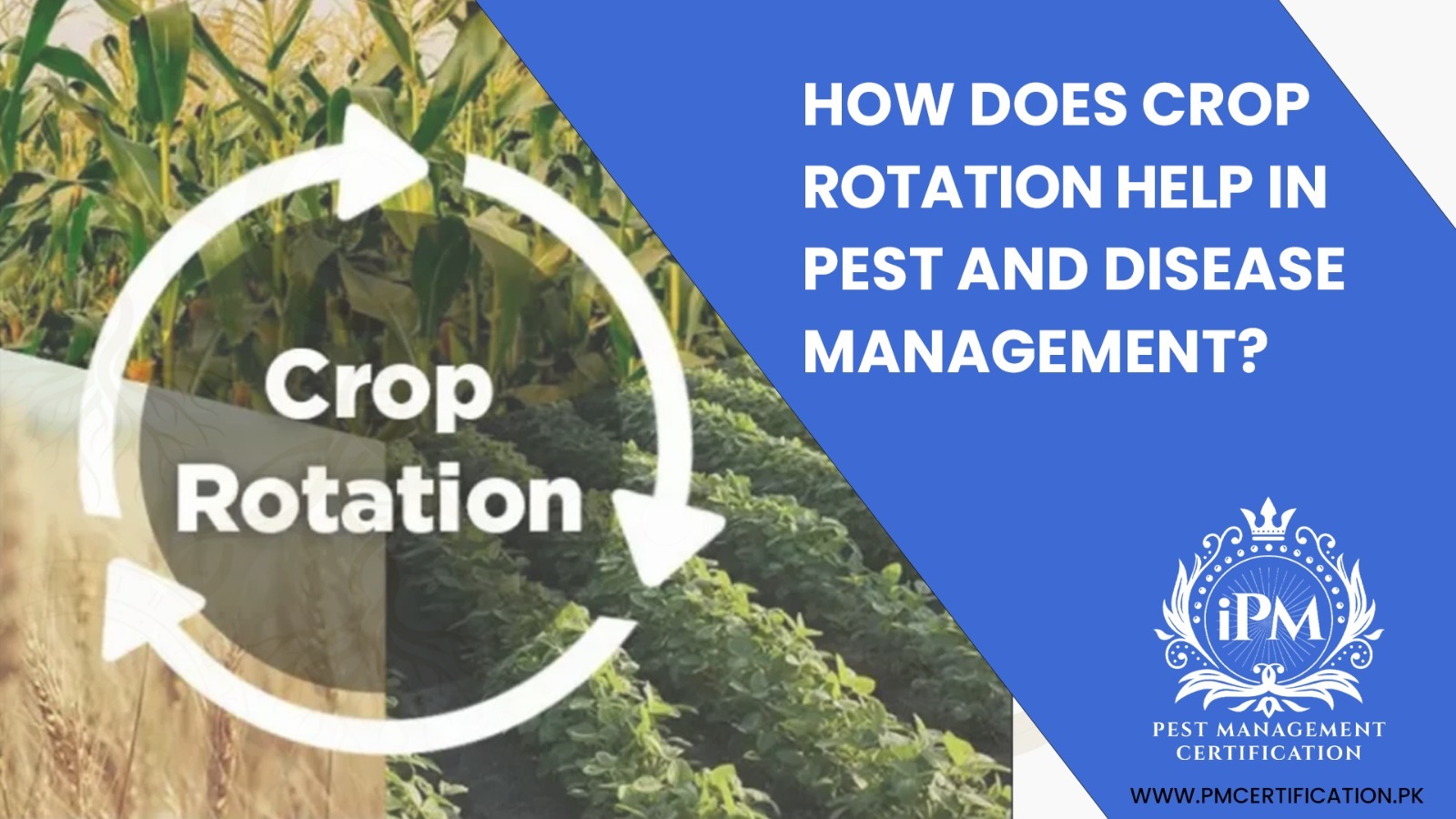
One smart and natural farming method to solve this problem is crop rotation. Today, many farmers have the question: “How does crop rotation fit into pest and disease management?” It is easy to see that the answer is simple. Crop rotation helps to stop the life cycle of pests and diseases and to maintain good soil health for growing crops.
In this blog, we will discuss the meaning of crop rotation, how crop rotation works, the advantages of crop rotation to help farmers manage pests, and how Integrated Pest Management (IPM) can benefit them in maintaining a healthy crop while keeping the environment safe.
What is Crop Rotation
Crop rotation involves rotating crops on the same land in different seasons or years rather than repeating the same crop in the same land continuously.
For example:
- Each farmer produces wheat for one year.
- The farmer’s second crop of the year is the maize crop.
- A subsequent crop, such as vegetables or pulses.
This is a farming technique that keeps the soil healthy and reduces negative pests and diseases.
How Does Crop Rotation Help in Pest and Disease Management?
Crop rotation helps destroy the pest life cycle. Numerous pests attack a single crop. In an annual cropping system, pests have a ready food supply and can quickly multiply.
For example:
- Cotton pests grow fast when the cotton crop is planted repeatedly.
- Crops of wheat will become more virulent with successive cultivation.
- Crop rotation keeps pests from getting a taste of their favorite farmer. This results in the death or removal of many pests.
Crop Rotation: A Natural Solution for Managing Soil-Borne Diseases
Rotate crops used to control disease. Certain diseases are dangerous and remain in the soil for extended periods. Such diseases are known as soil-borne diseases, like root rot, wilt disease, and fungal infections.
These diseases strengthen if the same crop is grown each year. However, for disease management, the rotation method of crops is helpful in preventing the growth of disease, as the nutrients required by different plants are different, and the insects attracted to these crops are different.
One of the most effective natural farming techniques around the world is crop rotation to fight soil-borne diseases.
Advantages of crop rotation in pest control
Crop rotation offers numerous advantages in crop pest control. Let’s understand them in simple words.
- Fewer Harmful Insects: Crop rotation helps to deter pests and limit their population naturally.
- Better Soil Fertility: There are crops that replenish the soil. It will improve soil fertility and promote better growth of the following crop.
- Less Use of Chemical Sprays: With a natural decrease in pests and diseases, farmers can save on pesticide usage.
- Healthier Crops: Good soil and reduced disease enable plants to grow stronger and yield better.
- More Farm Profit: Good crop health leads to improved production and farmers’ income.
Strategies to improve soil health and fertility through crop rotation.
Soil health is crucial to agriculture. Crop rotation helps to enhance soil quality and to balance nutrients in the soil. Farmers also use:
- Soil testing service
- Soil testing laboratory
These services support farmers to monitor soil nutrients, soil condition, and fertility levels.
If they can test their soils and rotate crops, they are able to grow stronger crops and have better success in farming.
Best Crops in Crop Rotation
Generally, the rotation of these crops is done by farmers in Pakistan:
- Wheat Crops: In Pakistan, wheat is one of the leading rabi and kharif crops.
- Maize Crop: Maize enhances soil structure and promotes crop diversity.
- Cotton Crop: Crop rotation is one of the most effective methods of controlling pests associated with cotton, which is a cash crop.
- Rice Crop: Rice is a major cereal crop grown in waterlogged fields and is often used in crop rotation to maintain soil fertility, improve farm productivity, and support sustainable agriculture.
- Pulses and Legumes: These crops are a natural source of nitrogen to the soil, increasing the fertility of the soil without the addition of any chemical fertilizers.
Crop Rotation Farming Methods
Farmers practice crop rotation to improve pest control and promote good production practices in modern farming These include the following techniques:
- Organic farming
- IPM farming
- Soil testing
- Water management
- Biological pest control
These techniques provide farmers with protection and savings, as well as environmental benefits.
Role of Research Organizations in Pakistan’s Agriculture.
Several organizations help farmers protect their crops in Pakistan, and IPM supports farmers in the following ways
- Pest management research
- Soil fertility research institute support
- Improved crop production practices
- Research on the evolution of crops and genetic resource studies.
These programs help farmers learn safer and smarter farming techniques, while IPM provides natural and safe integrated pest management approaches. The goal of IPM is to minimize the use of pesticides and to use pesticides that are environmentally friendly.
IPM uses:
- Crop rotation
- Biological control
- Monitoring pests
- Safe pesticide use
- Healthy farming practices
Why IPM Certification Is Important
IPM Certification Pakistan is an initiative that helps pest management professionals enhance their knowledge and skills. IPM certification has many advantages.
- Better Career Growth: Experts are better trusted and competent in pest management.
- Eco-Friendly Pest Control: IPM educates on sustainable pest management practices that are safe.
- Improved Knowledge: Modern pest management techniques are taught to certified professionals.
- More Client Trust: Certified experts are the ones who are preferred for pest control services.
The IPM Certification offers comprehensive pest management programs like Pest identification learning, Safety protocols,Ongoing learning, and refreshments SOP. When you are looking for pest management, then IPM professionals are the best to consider, especially for the crop rotation to maintain the health of the crops and to offer better profits.
FAQs
The rotation of crops, which are planted at different times of the year and in different years on the same land, enhances soil and suppresses pest populations.
Yes. Crop rotation to minimize soil-borne diseases is highly effective as these do not accumulate in the soil.
Soil testing services enable farmers to comprehend soil nutrient and fertility levels, which can aid in the development of more productive crops.
Integrated Pest Management (IPM) is a safe and environmentally friendly approach to pest management that relies on natural and scientific methods.
Crop rotation is one of the important pest management methods under the IPM system, which helps in the reduction of pests and diseases naturally.
Farmers commonly rotate:
Wheat crops
Maize crop
Cotton crop
Pulses and legumes
These crops have the ability to enhance soil health and pest management.
Final Words
Now you understand what crop rotation means. Crop rotation refers to the rotation of crops on the same land over different time intervals. With crop rotation, you can improve pest management because it helps disrupt pest cycles, maintain healthy soil, suppress soil-borne diseases, and reduce the use of harmful chemicals.
Integrated Pest Management (IPM) provides farmers with safe pest management practices that benefit the crop, soil, people, and the environment. Rotation of crops along with IPM is one of the best practices to grow healthy crops and enhance the success of farming in Pakistan.