Integrated pest management is a modern and eco-friendly solution that has been developed to manage pests in a safe and effective way in today’s rapidly expanding cities. With increasing urbanization, pest problems have become very common in residential, commercial, and industrial settings such as homes, offices, restaurants, hospitals, and factories. Poor sanitation, large population density, and human activity create a favorable breeding site for pests. Traditional pest control method tends to rely heavily on chemicals, providing only temporary solutions while increasing health and environmental risk.
Long-term prevention by means of proper sanitation, structural modifications, monitoring, and accurate targeted treatment. This method reduces unnecessary chemical use and effectively controls pest populations at their source. By a combination of inspection, identification, and targeted control measures. In urban pest management, IPM principle provides a smarter, safer, and more eco-friendly way to protect residential and commercial spaces against pest problems.
Importance of Integrated pest management (IPM)
The Integrated Pest Management (IPM) approach is a safer, smart, science-based solution to controlling pests and is also effective. Instead of using only chemical pesticides, IPM uses a combination of control methods to achieve long-term pest prevention.
Protection of human health
IPM reduces the use of toxic chemicals, minimizes health risks for families, children, pets, and workers in residential, commercial, and industrial environments.
Eco-friendly
By using selected treatments and non-chemical methods, IPM minimizes pollution, protects beneficial insects, and assist maintain ecological balance.
Long-lasting pest control
IPM focuses on long- lasting pest control to identify pest species, their behavior, and breeding sources, ensuring a permanent control solution rather than a temporary solution.
Prevents pest resistance
More use of pesticides leads to resistance. IPM rotates methods and uses chemicals only when required, keeping treatments effective.
Suitable for homes and businesses
IPM is ideal for urban pest management, such as residential, commercial, food facilities, hospitals, and industrial sites, where safety and compliance are difficult.
Professional and legal compliance
IPM follows national and international pest control standards, supporting smarter, safer, and eco-friendly pesticide use and regulatory compliance.
What is integrated pest management?
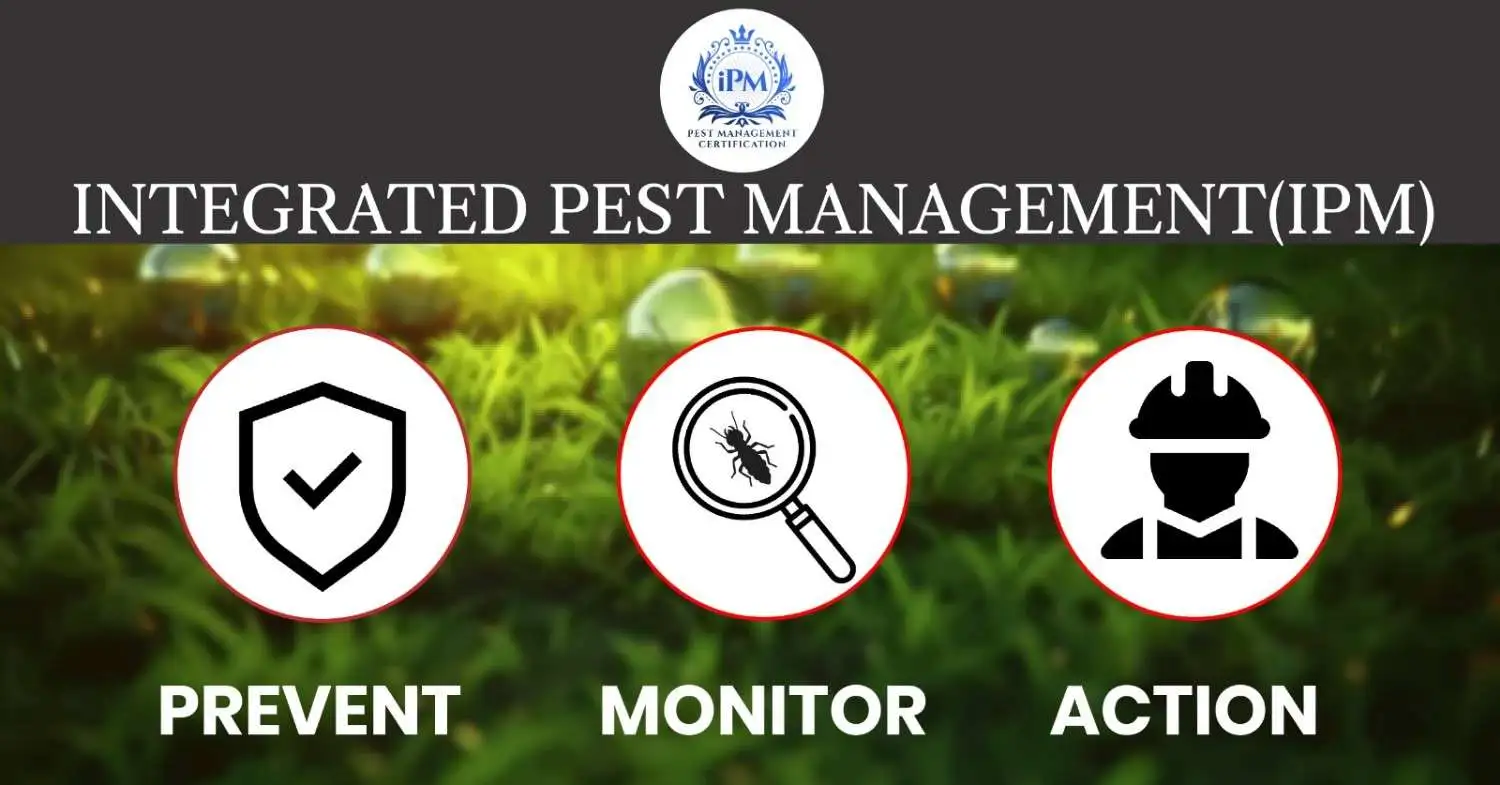
IPM is responsible for pest management that focuses on prevention, monitoring, and control. It involves accurate pest identification, pest behavior, and the infestation sources. IPM finds the most effective control method against pests. The key component of IPM is pest prevention, follows high-quality sanitation, and remove food and water sources, reducing clutter, and sealing entry points and cracks to prevent pests from entering the building.
Mechanical and physical control methods include traps, barriers, and heat or cold treatment to reduce pest population density through safe and eco-friendly way. When chemical control measures are necessary, IPM encourages the use of pesticides in a smarter, safer way and is used in targeted areas to reduce health hazards to humans, domestic animals, and the environment. Monitoring and evaluation are also done continuously to ensure the effectiveness of the control measures and make necessary adjustments. By combining various techniques of control methods in a strategic and systematic way, IPM offers long-lasting and cost-effective pest control measures, thus making it the most preferred method for commercial pest management, such as residential, commercial, and industrial areas, where safety, health, and environmental factors are of utmost importance.
Benefit of IPM
The benefit of IPM is the eco-friendly and long-term approach to control pests, and also the lowest usage of chemicals. For the control of pest IPM applied different approaches such as cultural control, physical control, mechanical control, biological control, and chemical control to prevent pests, and protect people in a very safe and smart way. It helps to protect biodiversity and also controlling pest strategically.
Less toxic to biodiversity
Upon the requirement of pest management , IPM uses a minute amount of chemicals to preserve biodiversity and constant ecological balance by protecting beneficial species. Put the safety of nature first by safeguarding biodiversity through the responsible and careful implementation of the IPM pest control technique.
Balanced ecosystem
At first, it may seem attractive to eliminate the whole pest population. But in most cases, it is important to the health of the environment to control the pest population rather than eliminate it. This is because even pests are a sensitive component of a healthy environment. In addition, the use of pesticides can also affect other beneficial animal species.
Minimize the rate of pesticide resistance.
More use of pesticides can lead to the development of resistance, making the effectiveness of chemical pest control methods less effective. For pesticide or chemical methods to be effective in controlling pest issues, the application of pesticides should be limited to extreme situations and should be done in conjunction with other IPM approaches. In pesticide application, the weak pest will die, and the strong pest will survive. The strong pest will develop resistance to pesticides, resulting in long-term pest issues. By using a variety of different IPM strategies, genuine pest control professionals can address pest problems effectively.
Cost effective
Preventive control measures minimize repeated treatments and long-term expenses.
Suitable for all environments
IPM is suitable for all kinds of environment such as residential, commercial, hospital, and industrial settings. That’s why IPM is very important for urban pest management and commercial pest management.
IPM-based techniques
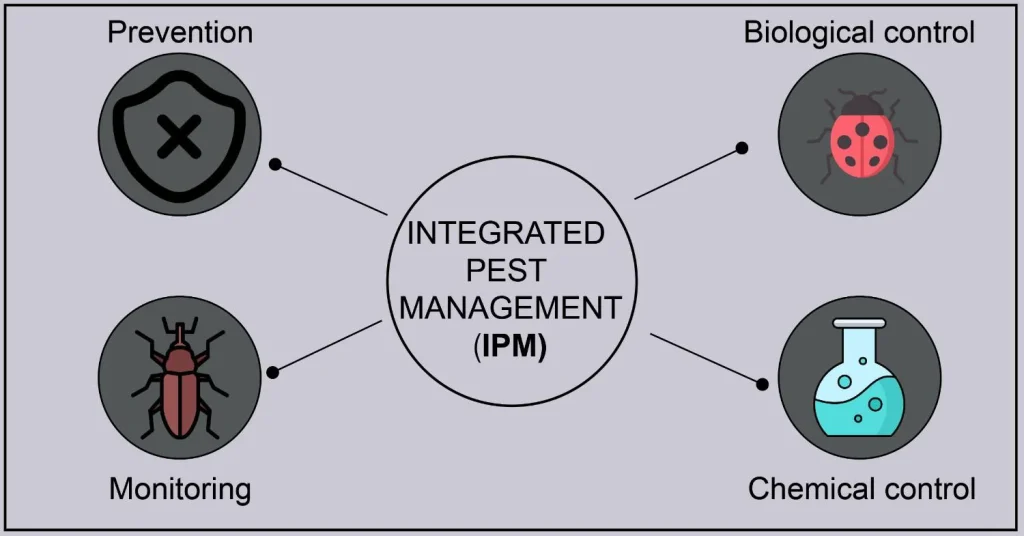
Integrated pest management is a technique that applies different tactics to control the pest population in a safer, effective, and sustainable way. IPM is a long-term pest control strategy that less use of chemical pesticides. The main methods of IPM are cultural, mechanical, biological, chemical, behavioral, regulatory/legal, and monitoring-based approaches.
Cultural control
Cultural pest management methods include crop rotation, sanitation, harvesting, removing habitats of pests, and ensuring that plants are healthy. The aim of the cultural control is to make the environment unfavorable to the pests.
Mechanical control
Mechanical control involves physical interventions that can be used to either prevent or remove pests. It includes trapping, barriers, screens, hand picking, vacuuming, and using tools such as sticky traps or pheromone traps. These techniques are environmentally friendly and offer immediate control.
Biological control
Biological control is another approach to controlling pests. The most common control agents are the ladybird beetle, Trichogramma species, and green lacewing. These agent uses against pests. This type of control method is very safe for biodiversity.
Chemical control
Chemical control is an important tactic in pest management. The pest infestation is severe. Chemical control can be strategically applied, using pesticides against pests that are less toxic to humans.
Regulatory and legal measures
Include quarantines, import/export controls, and compliance with local and international regulations on pest control. These are to prevent the spread of invasive pests.
Education and Awareness
IPM Certification is an institute of pest management that relies heavily on knowledgeable staff and informed communities to achieve effective results. By offering training on environmental safety, pest control, and promoting sustainable practices that prevent infestations. IPM Certification training is very important for commercial pest management to understand pest infestation in commercial settings. IPM Certification emphasizes during training on pest identification, biology, behavior, and damage of pests.
Frequently Asked Questions (FAQs)
IPM is a strategy used to control pests. Applied different method including cultural, biological, mechanical, and chemical, with the focusing of preventing and controlling pests in a way that does not pose any risk to human health and the environment.
Expert IPM is required for efficient, safe, and legal pest control, especially in food service areas, offices, hospitals, and food storage areas.
Cockroaches, bedbugs, termites, ants, wasps, flies, etc. IPM manages these common pests.
Yes, IPM is safe for humans and pests. IPM use chemical with non-toxic and have a low risk to the environment.
IPM is a long-term approach. IPM gave initial results within days, but complete control is not always quick and depends on the type of pest and the level of infestation
Conclusion
Integrated pest management is a technique to eradicate pests by various methods through inspections, continuous monitoring, and control measures. It provides long-lasting solutions and also protects biodiversity. IPM is applicable for both urban pest management and commercial pest management; IPM emphasizes the importance of pest management in maintaining a healthy and pest-free environment.